English
 中文简体
中文简体 Español
 عربى
عربى
News
Home / News / Industry News / Bio-Based and Recycled Nylon 6 Yarn: 2026 Buyer Guide to Sourcing and Specs
Content
Every sourcing conversation we sit in these days reaches the same question sooner or later: can I genuinely buy nylon 6 yarn made from renewable or recovered material, at a quality my knitting floor will not complain about and a price my costing sheet can survive? In 2026 the honest answer is yes, but the label on the carton tells you far less than most people assume.
Bio-based and recycled nylon 6 are usually mentioned in the same breath, yet they come from two very different supply chains, with different feedstocks, different certificate schemes and different production risks. Knowing which one you are actually buying is the first step toward a specification that holds up once the yarn reaches your machines.
We spin nylon 6 filament, textured yarn and covered yarns for a living, so this guide comes from the production side rather than the marketing side. Here is what we believe buyers should understand before placing 2026 orders.
Bio-based nylon 6 begins with caprolactam produced from renewable carbon rather than fossil naphtha. Castor oil is the best-known feedstock because its chemistry suits the necessary conversion steps, while sugar-based and other biomass routes have moved from pilot work into commercial scale in a few cases.
The detail that matters commercially is how the renewable feedstock reaches you.
Renewable monomer stays separate through polymerization and spinning, so the yarn physically contains the bio-based share. The bio-based carbon content can then be confirmed by radiocarbon testing such as ASTM D6866, which is closer to a measurement than an accounting claim.
Renewable and conventional feedstock enter the same process, and the renewable share is allocated to part of the output under a certified mass balance system such as ISCC PLUS. The yarn is chemically identical to standard nylon 6, and the claim is accounted for rather than traceable to a physical batch. Mass balance is legitimate and widely used, but brand teams sometimes assume they are buying segregated material. Settle that question early, in writing.
Recycled nylon 6 covers two routes that behave quite differently on a spinning line.
Waste created inside the textile chain, such as spinning waste, off-spec filament, warping and knitting trimmings, is collected, cleaned and re-melted or re-polymerized. Because the input is clean and well documented, pre-consumer chips are often more consistent than buyers expect, which makes this the easiest entry point into recycled nylon 6.
This route starts with carpets, fishing nets, industrial ropes and, increasingly, used apparel. Mechanical processes grind and re-melt, while chemical processes depolymerize the nylon back to caprolactam and polymerize it again. Chemically recycled caprolactam is equivalent to virgin monomer, which is why these grades can be spun to a specification very close to conventional yarn.
The choice usually comes down to the claim. A brand building a circularity story generally wants post-consumer content; a mill focused on cost and stability may be equally well served by pre-consumer grades.
The table below summarises how the two routes differ in practice. Treat it as a starting point for internal discussion rather than a rigid rule, because individual suppliers vary widely.
| Aspect | Bio-Based Nylon 6 | Recycled Nylon 6 |
|---|---|---|
| Feedstock | Renewable carbon such as castor oil or sugar-based intermediates | Pre-consumer textile waste or post-consumer nylon products |
| Typical claim | Bio-based or renewable content | Recycled content and circularity |
| Common verification | Radiocarbon testing, ISCC PLUS mass balance | GRS or RCS plus transaction certificates |
| Effect on yarn properties | Chemically identical polymer; differences come from process consistency | Mechanical routes vary more; chemical routes closely match virgin |
| Main sourcing risk | Limited volume and feedstock price volatility | Collection and sorting quality, certificate availability |
| Where it usually fits | Brands with renewable material targets | Brands with recycled content targets |
Alternative feedstock does not change what nylon 6 is, but it changes how consistently it spins. Chips from recycled or renewable routes can arrive with small variations in relative viscosity, moisture content and residual contamination. On a POY line those variations show up as filament breaks, uneven denier and drifting filter pressure, and they rarely appear on a data sheet.
The fix is unglamorous and effective: disciplined pre-drying, tighter filtration, and an acceptance window for incoming chips instead of a single target value. Buyers can protect themselves by asking for spinning trial data from the supplier's own line, not only laboratory results.
For mills sourcing pre-oriented yarn to feed their own texturing lines, this is the grade where a stable chip supply matters most.
The next surprise is dyeing. Bio-based and recycled nylon 6 take the same acid dyes as conventional yarn and usually reach the same shade, but the window for level dyeing narrows when amine end group content varies between batches. If your tolerance for shade variation is tight, run a pilot dyeing before committing to bulk.
Mechanical performance deserves equal attention. Chemically recycled and mass balance material typically match virgin yarn closely in tenacity and elongation, while mechanically recycled grades scatter more. In draw-textured yarn the difference appears first in bulk development, intermingling stability and broken filament count, all of which affect machine behaviour and hand feel.
We have written about the dyeing behaviour of recycled nylon yarn in more detail if you would like to go deeper.
Our draw-textured range is available in conventional, recycled and mass balance grades, so pilot lots are straightforward to arrange.
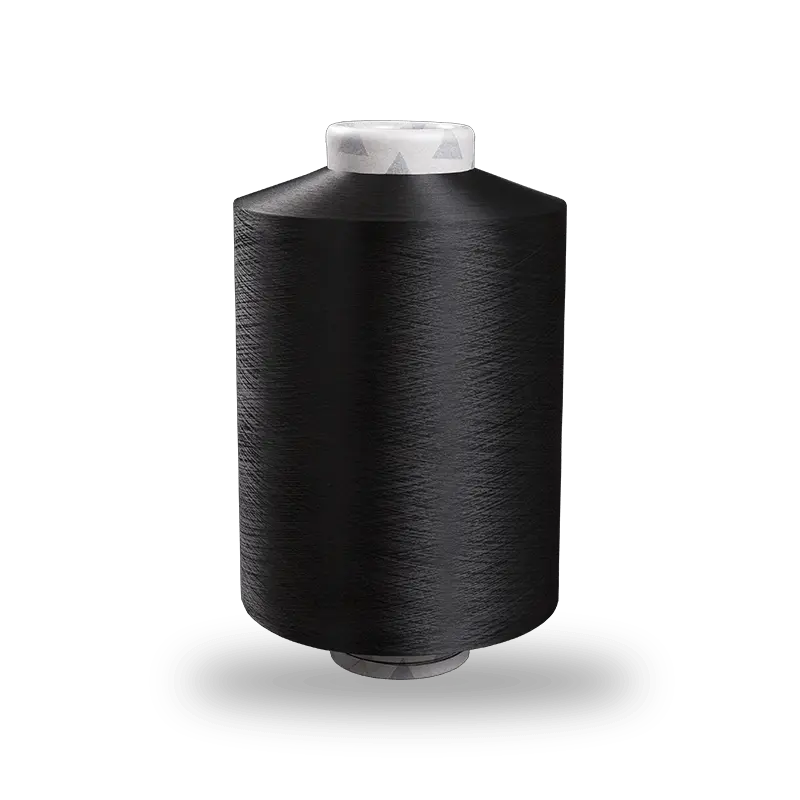 Nylon 6 DTY Draw-Textured Yarn for PilotsFor pilot lots, review this nylon 6 DTY with NIM, SIM or HIM intermingling, 20D–140D specifications, and raw white or black options.View Product →
Paperwork is where sustainable sourcing projects either succeed or quietly fall apart. Before you commit, request:
One caution: certification bodies audit systems, not promises. A scope certificate shows that a supplier is entitled to make a claim; the transaction certificate is what ties that claim to the yarn sitting in your warehouse. Our own spinning operations have been GRS certified for years, and the documentation behind it is something we are happy to share (see our company profile for the wider picture).
Both routes still carry a premium over conventional yarn this year. How large it is depends on the route, the certificate package, order volume and how much of the chain is already certified, so quotes vary widely between suppliers and between quarters. Budget for a premium and negotiate it down with volume rather than assuming parity.
Order quantities and lead times differ by yarn form as well. Common deniers of DTY and FDY are usually easier to secure, while unusual specifications and physically segregated bio-based material need longer planning. Certification documents can take almost as long to arrange as the yarn itself, so build that into your calendar.
Six steps cover most of the risk in a first sustainable nylon 6 programme:
None of this is complicated, but it does reward preparation. Buyers who ask for the certificate, test the yarn on their own machines and start with a modest order rarely get surprised. The ones who order on the strength of a booth banner usually do.
Whether your next programme needs POY for texturing, DTY for knitting or FDY for weaving, we are glad to talk specifications, share our documentation and send samples your way.
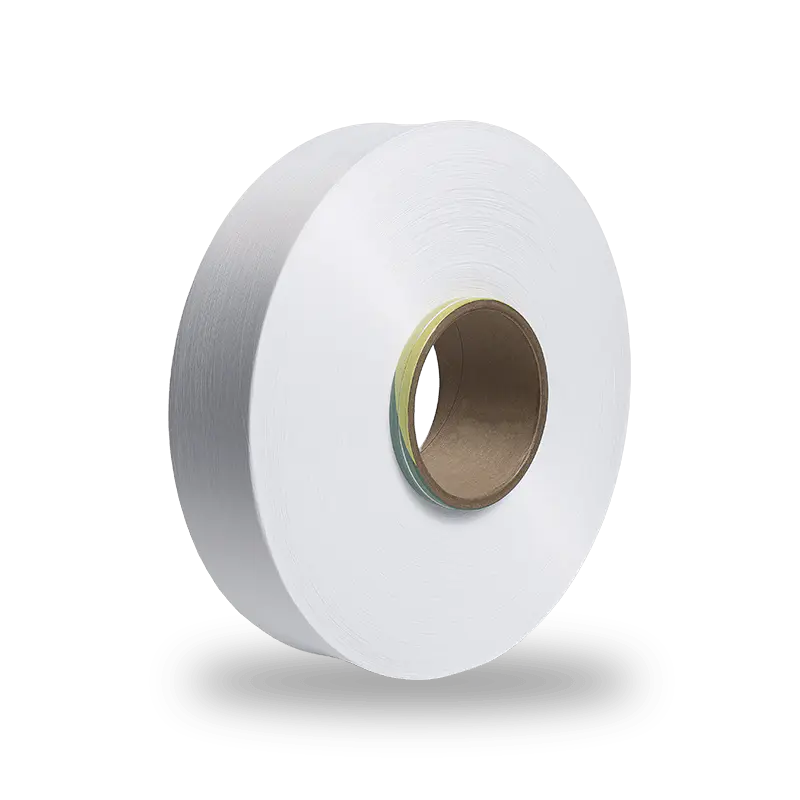 Nylon 6 FDY Fully Drawn Yarn for WeavingExplore this nylon 6 FDY for weaving and knitting programmes, with customization, raw white or black colors, and 20D–75D specifications.View Product →
+86-(0)572-6295569
+86-193 5712 3632
# 1, Fuqian Street, Si'an Town, Changxing County, Huzhou City, Zhejiang Province, China.