English
 中文简体
中文简体 Español
 عربى
عربى
News
Home / News / Industry News / Functional Knit Yarns for Gloves, Knee Braces and Wrist Supports: A Buyer's Guide
Content
There is a quiet corner of the textile industry that absorbs a remarkable amount of functional knit yarn while attracting very little fiber marketing: gloves, knee braces, wrist supports and the broader family of orthopedic and sports support wear. These products reach the market through pharmacies, sports retailers, rehabilitation clinics and online health channels. Almost all of them are knitted, almost all of them stretch, and almost all of them are expected to hold their compression after a hundred wash cycles.
That combination makes the segment unusually demanding. Support wear sits between performance apparel and medical devices, so the yarn has to do far more than look tidy on a cone. It must knit cleanly on fine-gauge machines, recover predictably after extension, and stay comfortable against skin for hours at a time. At Zhejiang Century ChenXing Fiber Technology, we spin nylon 6 POY, DTY and FDY, manufacture spandex air covered yarn and covered wire, and supply ring spun and siro spun yarns, a product mix that covers most of what this overlooked market needs.
Support wear is rarely knitted on ordinary fabric machines. Gloves are made on fine-gauge glove machines or narrow circular machines. Sleeves and braces are knitted on small-diameter circular machines, often with jacquard or mesh zones built into the structure. Wide back supports may be warp knitted. Needle density is high, and the yarn is fed under constant tension through hundreds of needles every minute, so a slub, a broken filament or an inconsistent intermingling pattern quickly becomes a hole, a needle line or a rejected lot.
Function adds a second layer of difficulty. Compression is a measurable property rather than a marketing word: the pressure a knee sleeve applies is determined by the spandex content, the draw ratio during knitting, the fabric density and the finishing route. When the incoming yarn varies, the finished compression varies with it, and that is exactly what brand owners and their testing labs will catch.
The categories look similar on a shelf, yet each one pulls the yarn in a different direction. A therapy glove is judged on fit and skin feel, a knee sleeve on compression retention, and a back support on width stability. The table below summarizes how nylon and spandex yarns are typically combined.
| Product category | Typical knit structure | Main nylon yarn | Stretch component | What buyers verify |
|---|---|---|---|---|
| Compression and therapy gloves | Fine-gauge flat or circular knit | Nylon 6 DTY, 30D to 70D | Air covered yarn, 20D to 40D spandex core | Skin comfort, wash shrinkage, finger fit |
| Wrist supports and wraps | Flat knit body with elastic edges | DTY 70D or FDY panels | ACY or covered wire for edges | Edge recovery, abrasion, thickness |
| Knee sleeves and braces | Circular knit with mesh zones | DTY 70D to 140D | Single covered yarn or high-spandex ACY | Compression retention, slippage, breathability |
| Ankle, elbow and calf supports | Seamless circular knit | DTY 70D | Air covered yarn | Graduated compression, cycle durability |
| Back and abdominal supports | Warp knit or wide flat knit | FDY or DTY as ground yarn | Heavy ACY or covered wire | Width stability, stiffness, heat build-up |
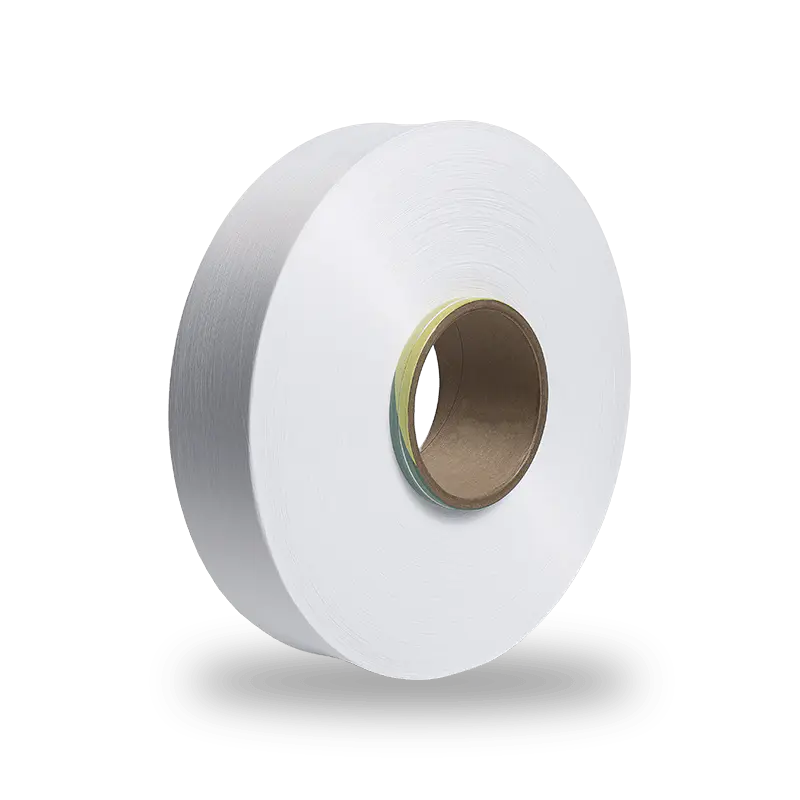
Most support wear begins with draw textured yarn. Nylon 6 DTY carries a false-twist crimp that gives the finished fabric bulk, stretch and a soft, dry hand, while the filament structure delivers the tensile strength and abrasion resistance these products need. Because textured yarn covers well at low denier, knitters can build denser, more supportive structures without pushing fabric weight up or losing the flexibility the wearer expects.
Intermingling is where DTY earns its place on fine-gauge machines. NIM, SIM and HIM grades differ in the number of interlacing nodes per meter, and the right level keeps filaments together through the needle path without adding twist. Too few nodes and the yarn opens up, snagging on needles and creating filament fly; too many and the yarn stiffens, flattening the hand of a glove or the soft edge of a wrist wrap. Consistency across the package matters just as much as the average figure, because a single soft spot can break a knitting run.
Dyeing behavior is the other reason buyers stay with nylon 6. Deep blacks, medical whites and the mid-tone fashion shades that dominate sports supports all develop cleanly, and the yarn accepts the antimicrobial and moisture-management finishes that brands increasingly request.
If DTY provides the body of a knee brace, covered yarn provides its memory. A spandex core wrapped or air-entangled with nylon filament delivers the force that pulls a sleeve back into shape after the knee bends, and the choice between air covered and single covered yarn shapes both the cost and the performance ceiling.
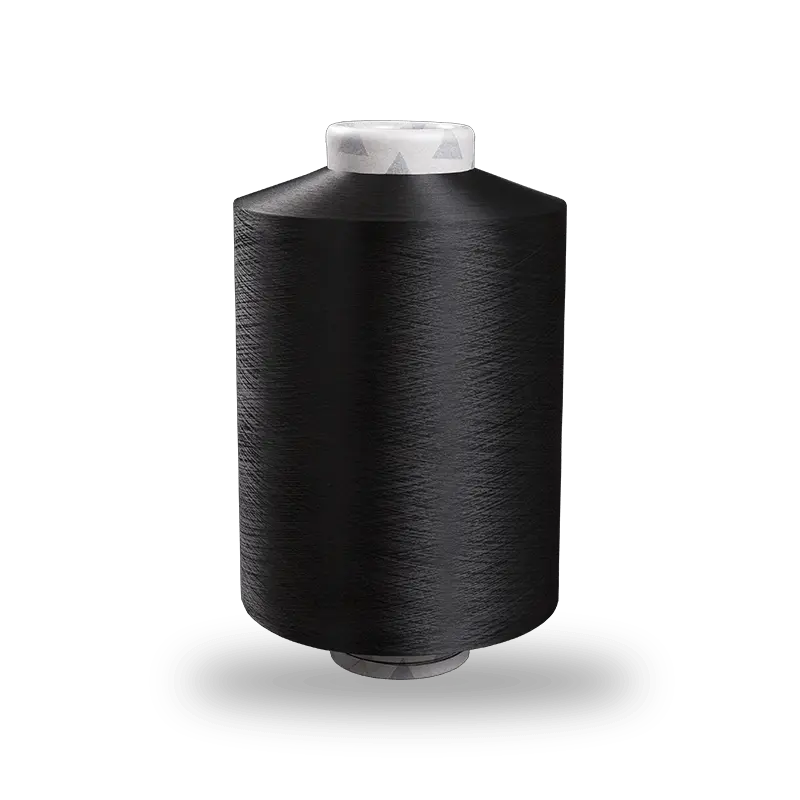
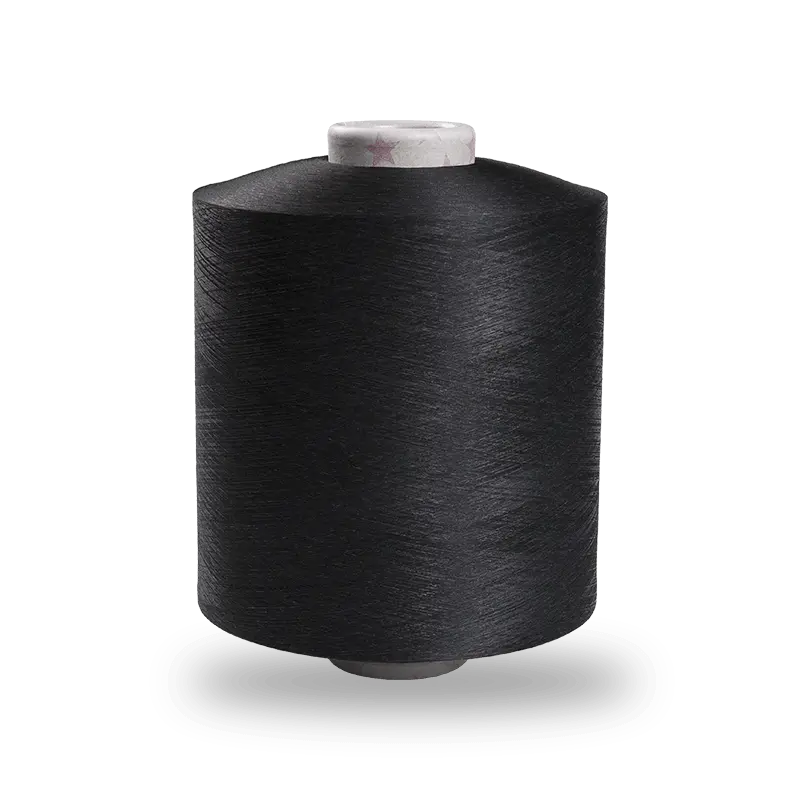
Air covered yarn entangles the spandex core with the nylon sheath in a compact, low-twist structure. It knits fast, feels soft, and suits the moderate compression levels found in gloves, calf sleeves and everyday wrist supports. Single covered yarn wraps the core tightly with a defined number of turns, which produces stronger holding power and better compression retention over many wear cycles, at a slightly higher cost and with a firmer hand. Buyers comparing the two often find that the deciding factor is not price but the compression class printed on the label; a detailed comparison of the two structures is available in our guide to choosing between air covered and single covered yarn.
For narrow elastic edges, cuffs, thumb loops and hem bands, a finely wrapped covered wire gives knitters a thin, strong elastic that folds neatly without bulk. It is a small component in terms of weight and a decisive one in terms of how a support stays in place.
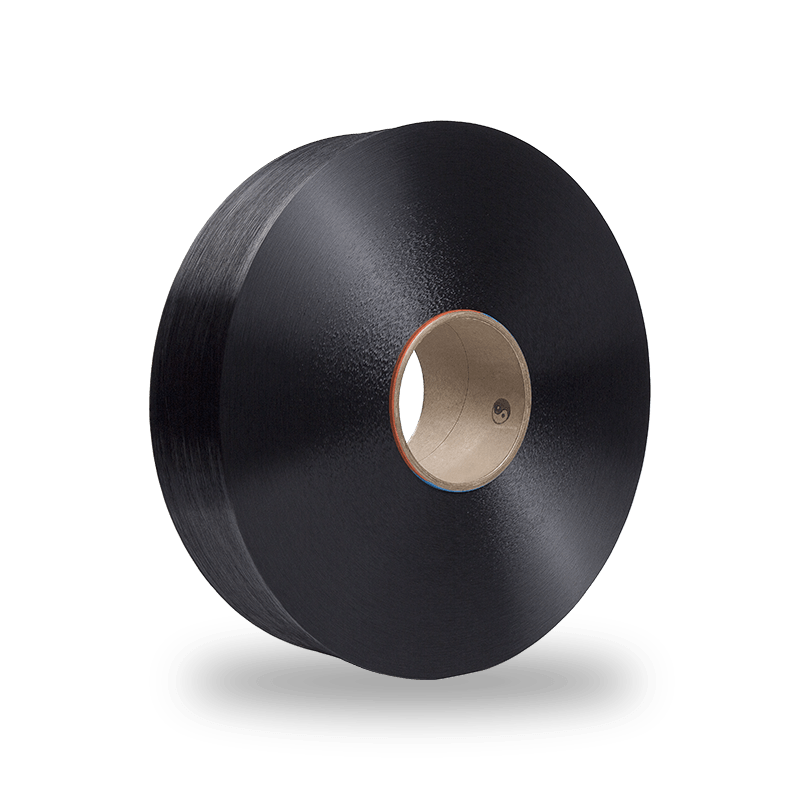
Not every part of a support garment should stretch. Ventilation panels behind the knee, mesh inserts on the back of a glove, reinforcement strips and warp-knitted backings are all built from fully drawn yarn. Nylon 6 FDY brings high orientation, stable tenacity and minimal residual shrinkage, so those zones hold their dimensions through knitting, dyeing and repeated laundering instead of relaxing into a shapeless panel.
Lightweight FDY also helps manage heat. Support wear is worn against the skin during activity, and a fine FDY mesh structure moves moisture away from the body while letting air pass, which keeps the garment wearable for longer sessions.
Yarn specifications in this market are more than a denier and a color. When you write a purchase order for support wear yarns, ask for the following data and confirm that it is measured on the same test method from lot to lot.
Support wear manufacturers need a yarn partner who can supply a complete construction rather than a single item. Our annual capacity of 170,000 tons spans nylon 6 POY, DTY and FDY, spandex air covered yarn, covered wire and spun yarns, produced on TMT spinning and winding machines, Barmag texturing machines, and Murata winding equipment. A provincial high-tech research and development center, GRS certification and continuous equipment upgrading keep quality stable as volumes grow, and every order is supported by production and quality control working as one process rather than two departments.
If you are developing a glove, brace or support program, or you are trying to reduce lot-to-lot variation in an existing one, our team can recommend a yarn structure, supply samples for knitting trials, and help you match compression targets to the right covered yarn. Simply get in touch with our yarn specialists and describe the product you are building.
Gloves, knee braces and wrist supports may never attract the attention that sportswear or fashion fabric does, but the yarns inside them carry the same technical demands: repeatable elasticity, clean knitting performance, durable appearance and long-term comfort against skin. Treating functional knit yarn as an engineered component rather than a commodity is the difference between supports that keep their shape and supports that end up in the returns bin.
Compression Socks: Gradient Pressure Is Calculated in the Elastic Yarn Before Knitting
No next article
+86-(0)572-6295569
+86-193 5712 3632
# 1, Fuqian Street, Si'an Town, Changxing County, Huzhou City, Zhejiang Province, China.