English
 中文简体
 Español
 عربى

News
Home / News / Industry News / Combed vs. Carded Ring Spun Cotton Yarn: How to: Practical Applications, Selection
Content
“Combed ring spun” and “carded ring spun” sound like two competing yarn types, but they describe two different decisions. Carding and combing are fiber-preparation steps. Ring spinning is how those prepared fibers are drafted, twisted, and wound into yarn. Once you separate the two, the choice becomes practical: match fiber preparation and spinning quality to the fabric you intend to make.
This guide is written from a spinner’s point of view, because the differences that matter at the loom or knitting machine are often not the ones that dominate a sales sheet.
Every cotton yarn is carded. The card opens, cleans, and disentangles the fibers, removes leaf and seed fragments, and forms a continuous sliver. Carding aligns the fibers roughly, but it does not separate short fibers from long ones. A carded sliver therefore contains a broad range of fiber lengths.
Combing is an extra step. The comber removes short fibers, fine trash, and small neps, then straightens the remaining fibers further. The result is a more uniform sliver that can be spun into finer, smoother, and stronger yarns. Combing also removes a share of the fiber mass as noil, which is one reason it costs more.
Ring spinning comes afterward. The spinning frame drafts the prepared sliver or roving into a fine strand and inserts twist on a travelling spindle. A combed ring spun yarn has been combed and then ring spun. A carded ring spun yarn skipped combing but still went through ring spinning.
Carded ring spun yarn is the workhorse of the category. Because more short fibers remain, the yarn surface has more protruding fiber ends. Fabrics tend to show a little more texture and hairiness and a slightly more casual hand. At the same count, carded yarn is usually a little less even and a little lower in strength than combed yarn, although cotton grade and twist can narrow that gap.
Its advantages are cost and character. Carded ring spun cotton is durable, substantial, and well suited to heavier jersey, fleece, terry, canvas, denim, workwear, and many home textiles. It can print well, but very fine detail may look less crisp against a hairier surface. Carded does not mean poor quality. A well-spun carded yarn from good cotton can be exactly right when body and texture are part of the design.
Combing changes the surface and the economics. With fewer short fibers and neps, more of the fiber mass runs continuously along the yarn axis. The yarn is smoother, stronger, more even, less hairy, and more receptive to clear dye shades. Finer counts become practical, so a fabric can be lightweight without feeling weak.
Combed ring spun cotton is often chosen for fine-gauge jersey, underwear, premium T-shirts, dress shirts, lightweight knits, and next-to-skin fabrics. It usually resists pilling better than carded yarn, but it is not pill-free; twist, blend ratio, and finishing still matter. Expect to pay more for the extra processing, fiber loss, and lower throughput.
| Factor | Carded Ring Spun | Combed Ring Spun |
|---|---|---|
| Fiber preparation | Carded only; short fibers retained | Carded and combed; short fibers and neps removed |
| Fiber uniformity | Broader length distribution | Tighter distribution and more parallel fibers |
| Hand feel | Textured, slightly drier, softens with washing | Smoother, silkier, often softer next to skin |
| Strength | Good, especially at coarser counts | Higher at the same count; more efficient load bearing |
| Pilling tendency | Moderate; surface hairiness can entangle | Lower tendency, but not pill-free |
| Surface and print | More hairiness; fine print edges less crisp | Smoother surface; clearer prints and shades |
| Typical use | Heavy jersey, fleece, canvas, denim, terry, workwear | Fine jersey, underwear, shirting, lightweight knits, premium tees |
| Relative cost | Lower | Higher due to extra processing and fiber loss |
The table is a starting point, not a specification. A 30/1 carded ring spun yarn and a 30/1 combed ring spun yarn can feel closer than expected when twist and finishing differ. Likewise, a coarser combed yarn may not feel noticeably softer than a well-made carded yarn in a heavy fabric.
You can comb cotton and then spin it on a rotor; you can also card cotton and ring spin it. Comparing “combed” with “ring spun” as if they were alternatives mixes up fiber preparation and yarn formation. Ring spinning generally produces a yarn with more parallel fibers and a soft, dry hand, while rotor spinning is faster and cheaper but creates a different surface structure. In many fabrics, a carded ring spun yarn can outperform a combed rotor yarn on strength and hand, even though its fiber preparation is less refined.
This is why a spec line should state both parts clearly: “combed ring spun, 30/1, twist X” or “carded ring spun, 20/1, twist Y.” The words before “ring spun” tell you about fiber selection; the words after it tell you about yarn structure.
You can see the drafting, twisting, and winding stages on our ring spinning line here:
For fine-gauge work, it also helps to agree on the finishing assumptions. A yarn that looks smooth on the cone can become hairy after dyeing, and a yarn with good strength in the lab can behave differently after repeated washing.
For heavyweight T-shirts, sweatshirts, canvas, terry, and value-focused home textiles, carded ring spun cotton often gives the best balance of performance and cost. For fine-gauge knits, underwear, premium T-shirts, dress shirts, and fabrics where a clear surface or low pilling is central, combed ring spun cotton is usually easier to specify with confidence.
When combed ring spun yarn still shows too much hairiness for a very fine knit, compact or Siro spinning can be added to the spinning route. You can review our Siro spinning options here:
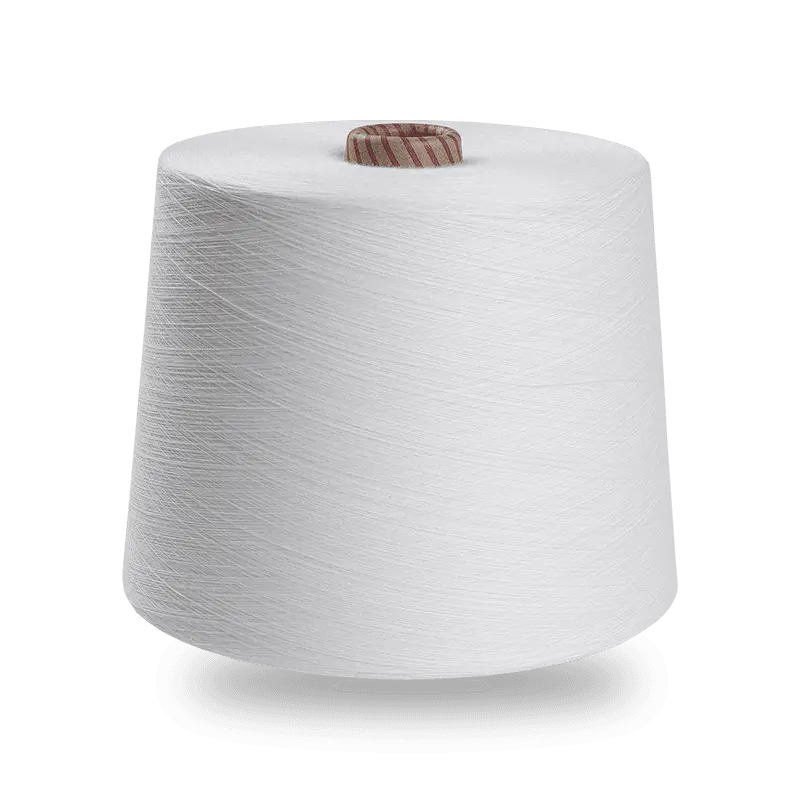 Siro Spun Yarn for Fine Knits and WovensDouble-twist AB yarn in viscose and blends, offering less hairiness and smoothness for fine knitting and weaving; review options for specification needs.View Product →
The right choice is the least expensive yarn that reliably meets the fabric’s performance targets. That may be carded. It may be combed. It is rarely the most premium label on the price list. If you are narrowing down a specification, contact our team for a practical review.
+86-(0)572-6295569
+86-193 5712 3632
# 1, Fuqian Street, Si'an Town, Changxing County, Huzhou City, Zhejiang Province, China.