English
 中文简体
 Español
 عربى

News
Home / News / Industry News / Common Yarn Defects in Knitting and Weaving: A Practical Troubleshooting Guide
Content
There is a moment every fabric producer knows. The greige roll looks clean, the machine never stopped, and then the dyed piece comes back with a faint horizontal line that was not there before. The knitter looks at the yarn. The spinner asks about tension, needles and storage. In our experience both sides are usually a little bit right, and the fastest way out is a shared routine rather than a shared accusation.
We spin nylon filament, elastic covered yarn and staple spun yarns for mills that knit and weave every day, so we spend a lot of time in exactly that conversation. What follows is the troubleshooting order we have found most reliable: how to recognise the common yarn-driven defects, how to separate them from machine faults, and what to fix at the source before the next lot runs.
Before anyone touches a dial, look at how the fault behaves across the roll. Three questions usually narrow the field very quickly.
Faults that wander, change density along the roll, or only show up after dyeing are the ones that deserve a closer look at the yarn itself.
In staple yarns — cotton, viscose blends and the compact or siro-spun families — evenness is mostly a drafting story. A thick place generally means a drafting wave or a cluster of fibres released together; a thin place means the drafting zone briefly ran short of fibre. The usual culprits sit upstream: carding, worn cots or eccentric rollers, tired aprons, and fly drifting into the creel from an open bin.
In knitting, those irregularities show up as barriness, slubs, and occasionally a cracked needle when a heavy lump forces the latch. In weaving they become visible slubs in the cloth or an end break at the heald. The practical check is to compare the yarn's evenness data with the count you ordered rather than staring at the fabric: CV%, thick and thin counts at plus and minus fifty percent, neps at two hundred percent. If the clearer cut settings on the winding machine were relaxed to chase yield, the fabric is where that decision is eventually paid for.
Humidity matters more than most mills expect. Dry air makes staple yarn brittle and fly-blown; damp yarn drags in the creel and forms slubs at the guide. Somewhere in the fifty-five to sixty-five percent relative humidity range, most spun yarns behave predictably.
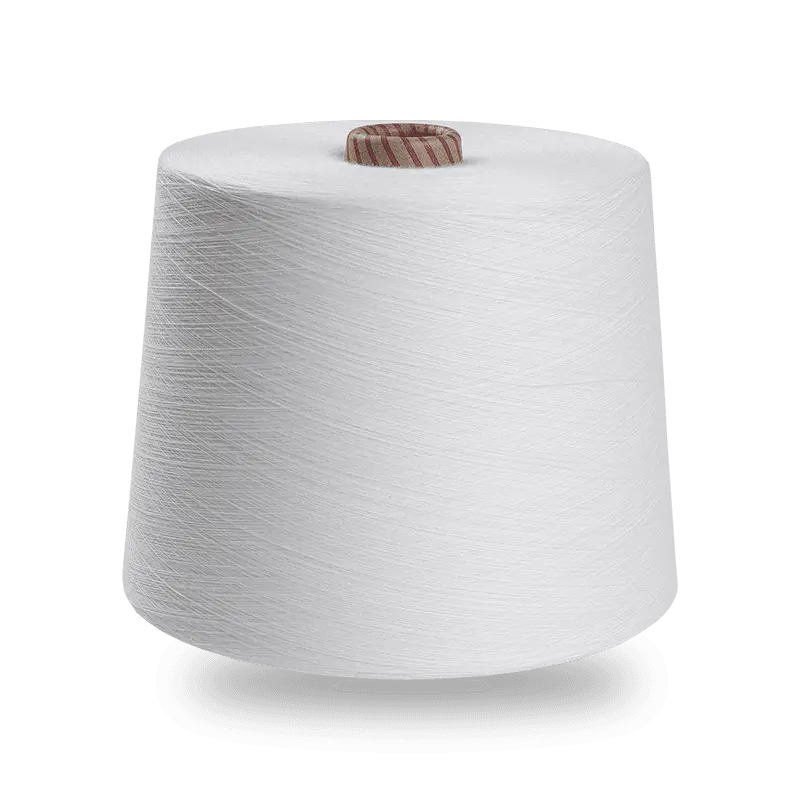 Siro Spun Blended Viscose and Synthetic YarnsLow-hairiness siro spun yarns in viscose and polyester blends, offered for smoother knitting and weaving where fibre protrusion and humidity-related defects matter.View Product →
Hairiness rarely stops a machine. It pills, it fuzzes, it makes deep shades look dusty grey, and it wears guides and needles slowly enough that nobody connects the two. Long protruding fibres also bridge between needles in fine-gauge knitting, producing small holes that appear a metre after the real cause.
On ring-spun yarn, hairiness usually traces back to traveller condition, ring diameter, spindle speed and the splice or knot quality at winding. On filament yarn, it comes from abrasion — a rough guide, a chipped ceramic eyelet, a package rubbing against a creel peg. A quick black-board test at the machine, running yarn across a dark surface under a light, will show fuzz, loops and broken filaments long before the fabric does.
Snarling is twist trying to run back on itself. It shows as tiny loops and kinks between the package and the needle, and it usually means the twist level is high for the yarn's count, the yarn was never conditioned after twisting, or the yarn is being pulled off the package in the wrong direction. Older packages that have sat in a warm store also relax differently from fresh ones.
Spirality, or skew, is the fabric version of the same conversation. In single jersey it appears as a leg that twists after washing. Twist liveliness in the yarn contributes, but so does an uneven elastic core: if the spandex draft varies package to package, the loop length changes slightly and the fabric leans. When a mill reports skew on a stretch fabric, we ask for the elastic yarn lot and the draft setting together, because changing only one of them rarely solves it.
Filament defects behave differently from staple ones. A broken filament does not create a slub; it creates a fine, hairy tail that later becomes a pinhole, a drop stitch or a thin place in the dyed fabric. Loops and intermingling nodes that were meant to be tight can open up at the needle and snag on the next course.
The causes are usually mechanical and upstream of the knitting machine: a damaged guide at texturing, a tension spike during draw texturing, inconsistent intermingling air pressure, or a package that has been knocked so the surface layer is abraded. Ask for the package's tail-to-tail tension and check the outer layers before loading. If the first ten metres of every package are fuzzy, the problem is transport or handling, not the spinning line.
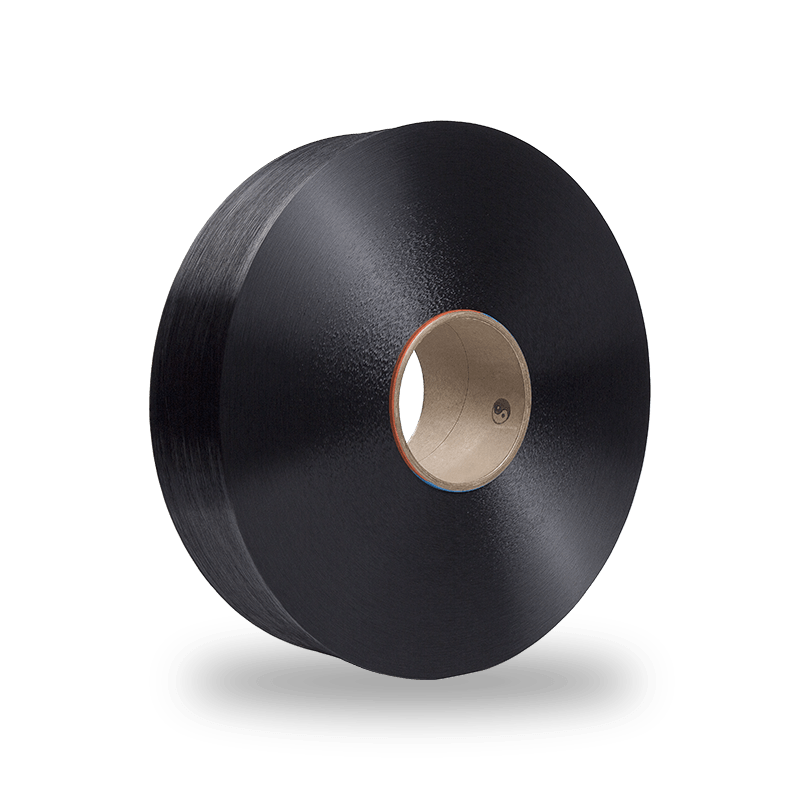
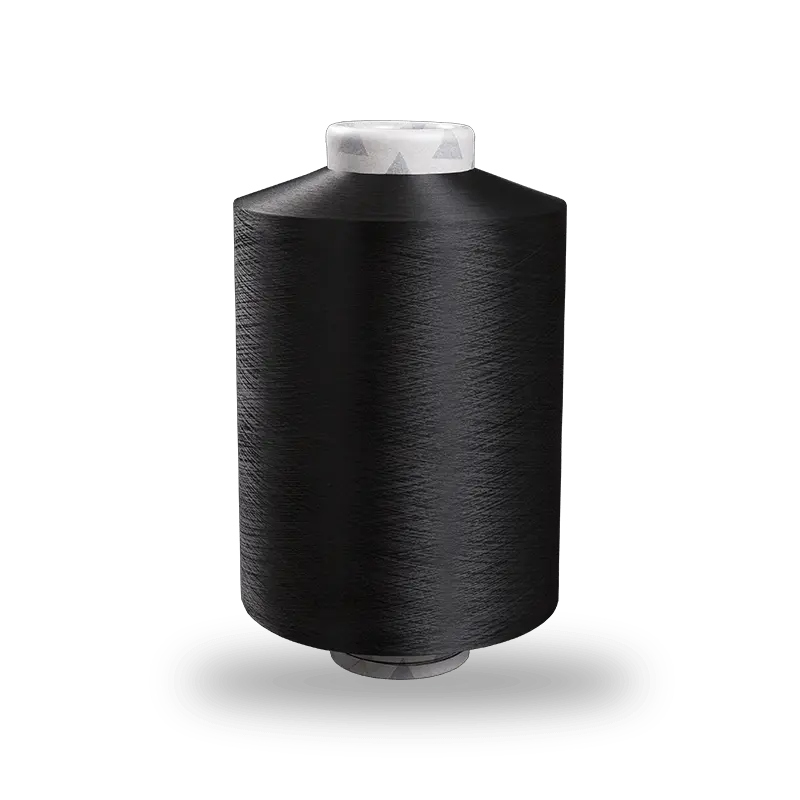 Nylon 6 DTY Filament Yarn with Intermingling OptionsDraw-textured nylon 6 filament yarn with NIM, SIM or HIM intermingling, suited to knitting and weaving where package consistency and dyeing behaviour are being checked.View Product →
Barré is a fabric word for a yarn word: dye uptake variation. Two packages with identical count and strength can still dye differently if their polymer viscosity, orientation or spin finish differs, or if one absorbed oil from a trolley wheel. That is why barré so often appears only after dyeing and cannot be caught by eye in greige.
The defences are procedural. Keep lots separated by feed and by machine, avoid mixing lots within a single roll, and knit a small panel from each lot before bulk production — a few courses on a sample machine will tell you more than a certificate. Store packages sealed and off the floor, and rotate stock first in, first out so the oldest yarn is not the one that has been sitting near a sunlit window for six months.
A single foreign fibre — a polypropylene strand from a bag, a jute fibre from packing, a hair from a sleeve — takes no dye and shows up as a bright fleck in a dark fabric. It is small, expensive and entirely preventable. Covered creels, intact package bags, colour-coded trolleys and a strict no-cardboard rule near the machine do more than any inspection.
Oil spots and rust marks are handling defects rather than spinning defects. Dripping lubrication, over-oiled needles and rusty guides all leave marks that bloom in dyeing. Rusty packages are usually the result of condensation during transport, so ask how the yarn was stored between the factory and your creel before you change supplier.
On the loom, yarn quality is tested at the warp beam. End breaks that cluster on one beam usually mean weak spots, broken filaments or uneven elongation rather than bad luck; check the warp yarn's tenacity and elongation against specification before blaming the sizing recipe. For staple warps, size pick-up and penetration still decide whether abrasion at the heald turns into a break thirty centimetres later.
Reed marks, temple marks and start-up marks are loom signatures, not yarn faults, and they will not disappear after a yarn change. Weft crack at the selvedge and loose picks, by contrast, often follow a yarn with low twist or poor winding tension. For stable, high-density warps a fully drawn yarn with consistent elongation is usually the calmer choice than a textured one, and that decision is worth making before the style is set.
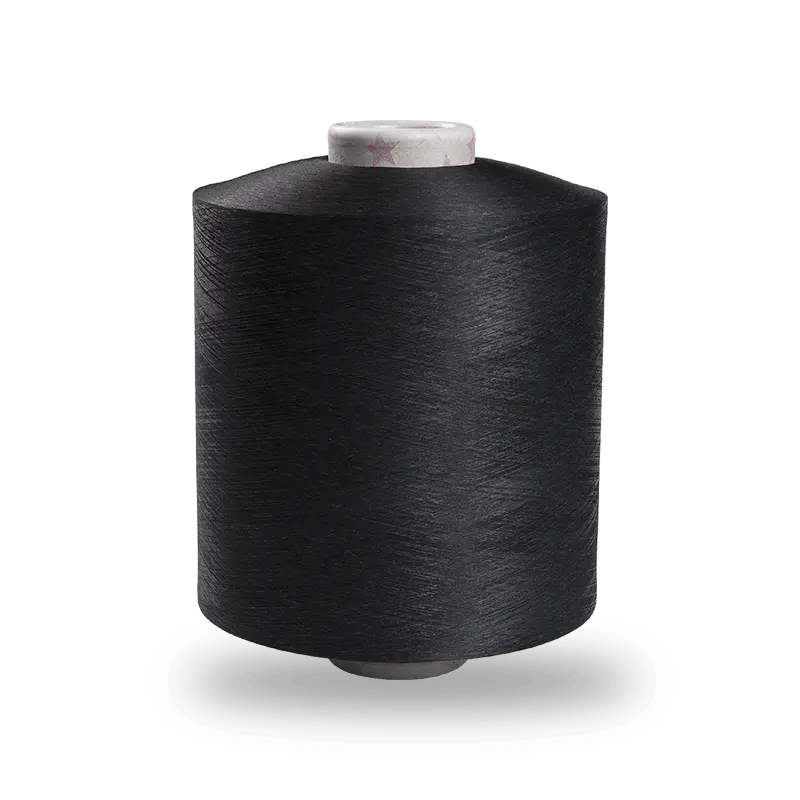
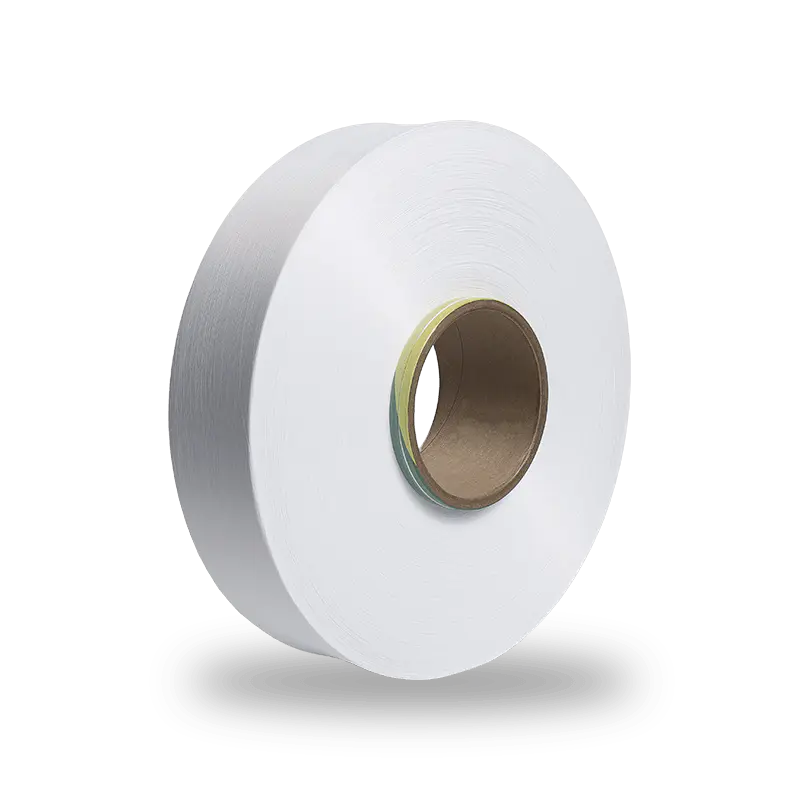 Nylon 6 FDY Fully Drawn Filament YarnFully drawn nylon 6 yarn with stable quality and uniform dyeing, suited to warp knitting and weaving where consistent elongation is preferred.View Product →
The table below is the shorthand we use on the floor. Treat it as a first filter rather than a verdict, and confirm each suspect by swapping one variable — feed, lot or machine — at a time.
| Fabric fault | What you see | Most likely origin | First check |
|---|---|---|---|
| Pinholes | Tiny holes, often in a line | Broken filaments, snagged loops | Package surface and guides |
| Drop stitches | Ladder running down a wale | Yarn fuzz or needle damage | Needle condition, hairiness |
| Barré | Horizontal shade bands | Dye uptake variation, mixed lots | Lot sequence on the creel |
| Spirality | Twisting, skewed panel | Twist liveliness, elastic draft | Twist factor and core tension |
| Slubs | Thick lumps at random | Drafting waves, fly, neps | Evenness data and clearer cuts |
| Stains | Oil or rust marks | Lubrication, condensation | Transport and storage conditions |
| End breaks | Repeated warp stops | Weak spots, uneven elongation | Tenacity and sizing pick-up |
Most of the defects above are cheaper to prevent than to repair. Ask your supplier for the lot number, the test data behind it and a knit-down or woven sample before bulk — and be specific about which of those numbers actually matters for your fabric. Not every mill needs the same specification, and a supplier who understands your end use can hold the right parameter instead of the widest one.
It also helps to agree in advance on how disputes are investigated: which side keeps the reference package, how long retention samples stay available, and who runs the first re-test. We keep retention samples of every lot and run routine physical testing in our own laboratory, so a claim can be traced back to a specific production window rather than settled by opinion. If you are reviewing how your incoming yarn is measured, our note on yarn quality metrics and process control walks through the tests worth putting on your own inspection sheet, and you are welcome to see how we run these checks in our testing laboratory.
Defect hunting gets much faster once everyone is reading the same signals. Fix the yarn where the yarn is at fault, fix the machine where the machine is at fault, and keep the records that let you tell the difference next time.
+86-(0)572-6295569
+86-193 5712 3632
# 1, Fuqian Street, Si'an Town, Changxing County, Huzhou City, Zhejiang Province, China.