English
 中文简体
 Español
 عربى

News
Home / News / Industry News / Covered Yarn for Elastic Webbing and Medical Bandages: A Practical Buyer’s Guide
Content
Covered yarn is easy to overlook until an elastic webbing or medical bandage reaches the customer and starts to lose recovery, shed lint, or behave differently from the sample. The core provides stretch; the sheath controls hand, abrasion resistance, processing and appearance. When both are specified as a system, the yarn feeds better, the finished article behaves more predictably, and fewer surprises reach the production floor. This guide is for buyers, product developers and production teams sourcing covered yarn for elastic webbing and medical bandages. At Century ChenXing, we produce nylon 6 DTY, FDY, POY and spandex covered yarns, so these notes come from daily contact with mills that process them. You can find more background on our fiber and yarn operations.
Elastic webbing and medical bandages both depend on controlled stretch, but they use it differently. Webbing may be woven, knitted or braided into narrow fabrics for garments, bags, furniture, PPE and industrial straps. Bandages may be woven, knitted or crocheted into rolls for compression, retention or support. In both cases, a covered yarn separates elastic function from surface function. The elastomeric core, usually spandex, supplies stretch and recovery. The sheath protects the core, adds strength, controls friction and carries color or finish.
Air covering entangles sheath filaments around a stretched spandex core with high-pressure air. It is efficient, gives a soft hand and works well in narrow webbing and knit bands. Single covering wraps one sheath yarn helically around the core; double covering adds a second layer in the opposite direction. Double-covered yarns generally offer tighter dimensional control and better abrasion resistance, which can help when a bandage will be stretched, converted and used repeatedly.
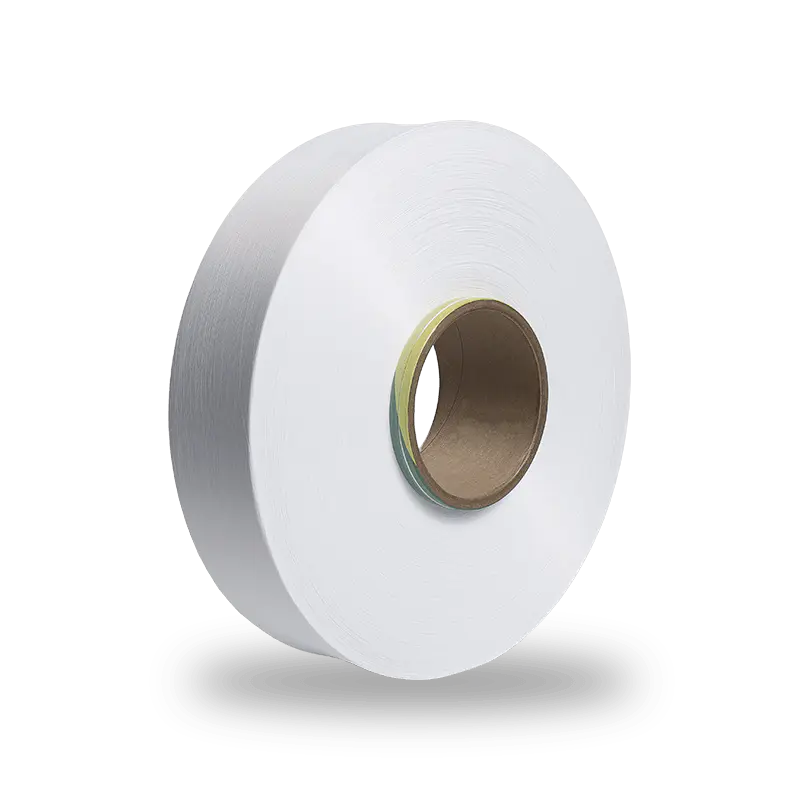
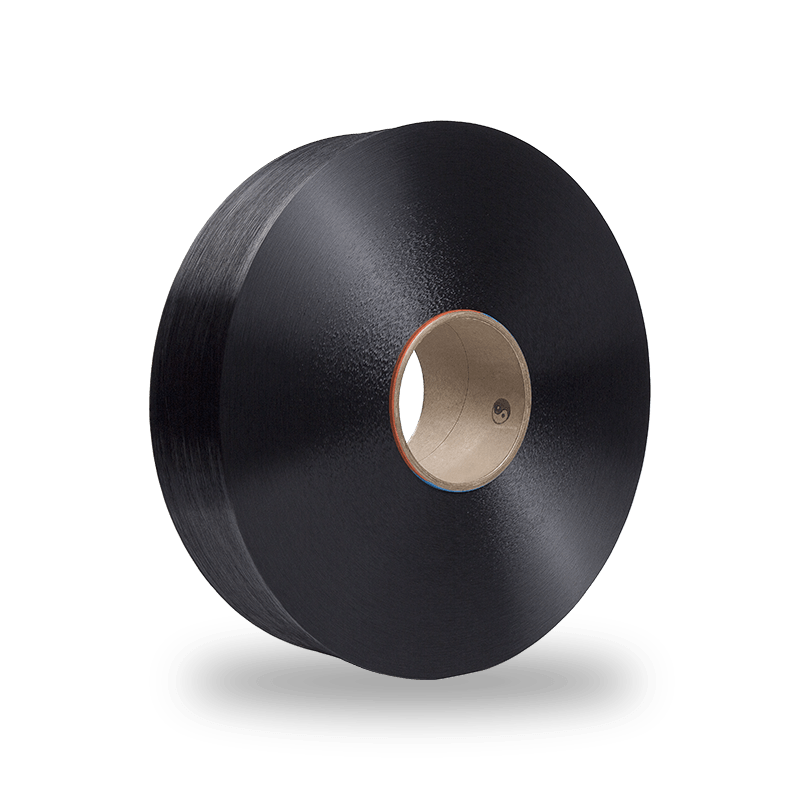
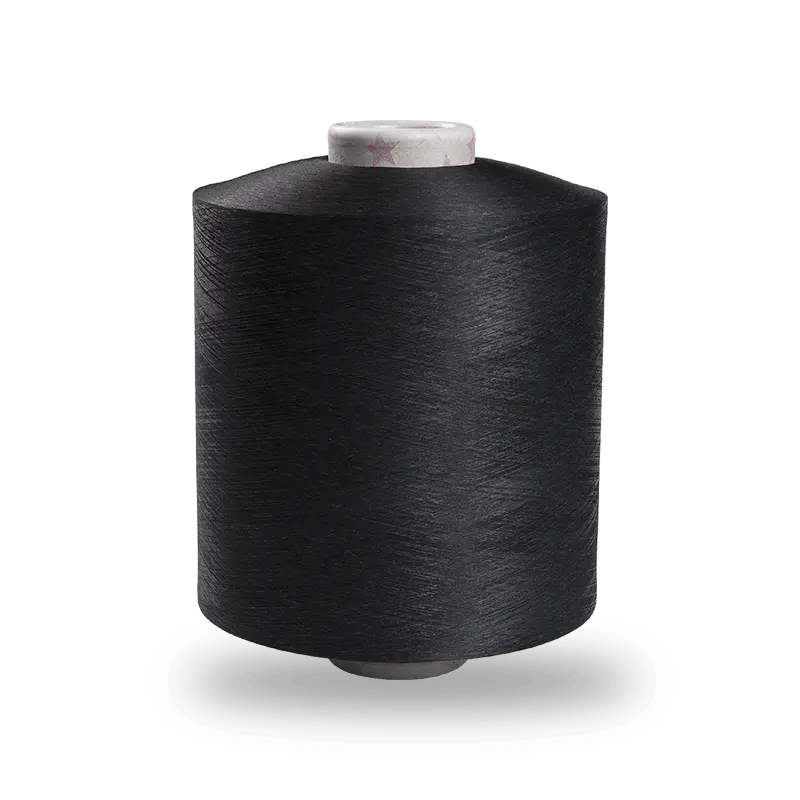 Air-Covered Spandex Yarn with Nylon SheathAir-covered nylon-spandex yarn offers a soft hand and color-mixing effects for stretch fabrics, bands and apparel programs.View Product →
Our spandex covered yarn family is produced with these conversion routes in mind. The right choice is not simply the most expensive construction; it is the one that matches the loom, knitting machine, dyeing route and target compression.
Use the table below as a starting point for discussion, not as a substitute for line trials. A yarn that runs well on one narrow-fabric loom may perform differently on a high-speed needle loom or a circular knitter.
| Construction | Core and sheath | Stretch character | Common fit | Buyer check |
|---|---|---|---|---|
| Air-covered spandex | Spandex core; nylon 6 DTY or FDY sheath | Soft stretch, good coverage, moderate recovery | Elastic webbing, knit bands, light compression | Interlace nodes, sheath coverage, air pressure, shrinkage |
| Single-covered | Spandex core; one helical sheath | Firmer hand, higher elongation | Narrow webbing, bandage edges, trim | Wrap density, twist, core exposure |
| Double-covered | Spandex core; two helical sheath layers | Strong recovery, high abrasion resistance | Compression bandages, durable webbing | Layer balance, elongation at load, heat setting |
Start with the finished article: width, thickness, elongation at working load, recovery after cycling, and the machine that will process the yarn. Then work back to the yarn. For webbing, buyers often focus on linear density, tenacity and abrasion resistance. For bandages, consistency matters more than raw strength alone: a small change in yarn elongation can shift the compression profile across a roll.
Core specifications usually include spandex denier, draft ratio, set or heat treatment, and whether the yarn is air-covered or helically covered. Draft ratio affects the balance between stretch and residual elongation. A higher draft gives more stretch potential but can make recovery and processing less forgiving. Heat setting can stabilize the yarn and reduce shrinkage, but it must be tuned to the sheath and the downstream finishing route.
Sheath selection is where many sourcing decisions are won or lost. Nylon 6 DTY is common because it gives softness, cover and good elastic compatibility. Nylon 6 FDY can be considered where a smoother, more dimensionally stable sheath surface is needed. Spun sheath options such as ring-spun or siro-spun yarns may enter when a different hand or dyeing effect is required. Whichever route you choose, confirm the sheath count, filament number, twist and interlace level against the machine's tolerance.
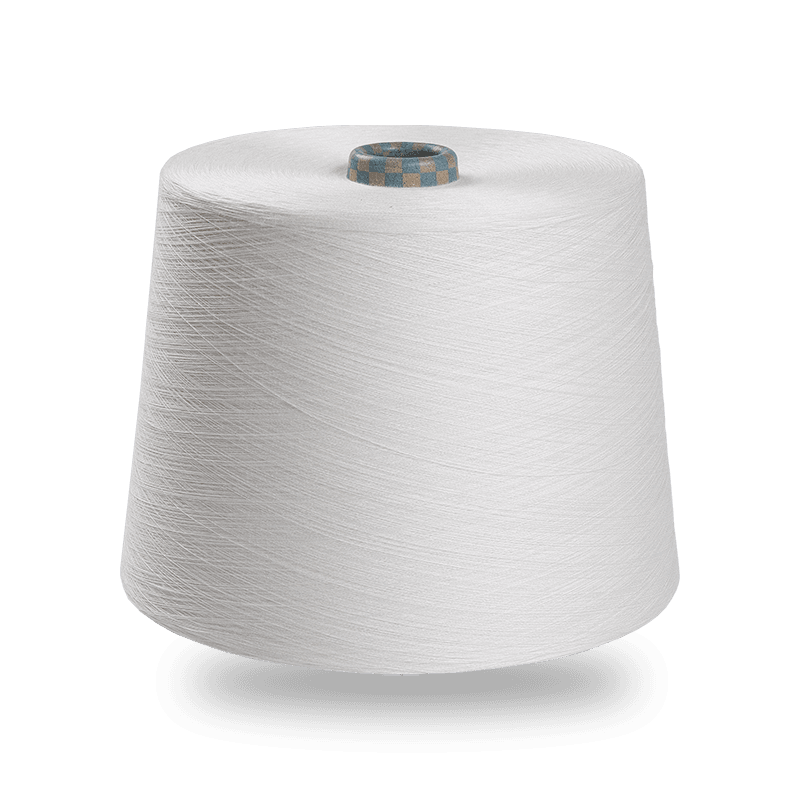
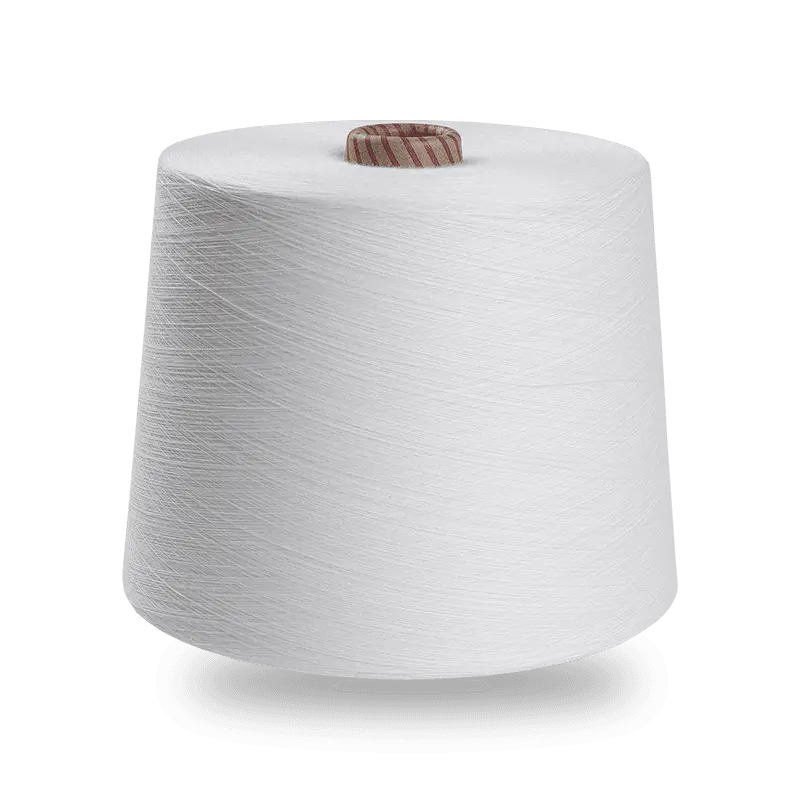
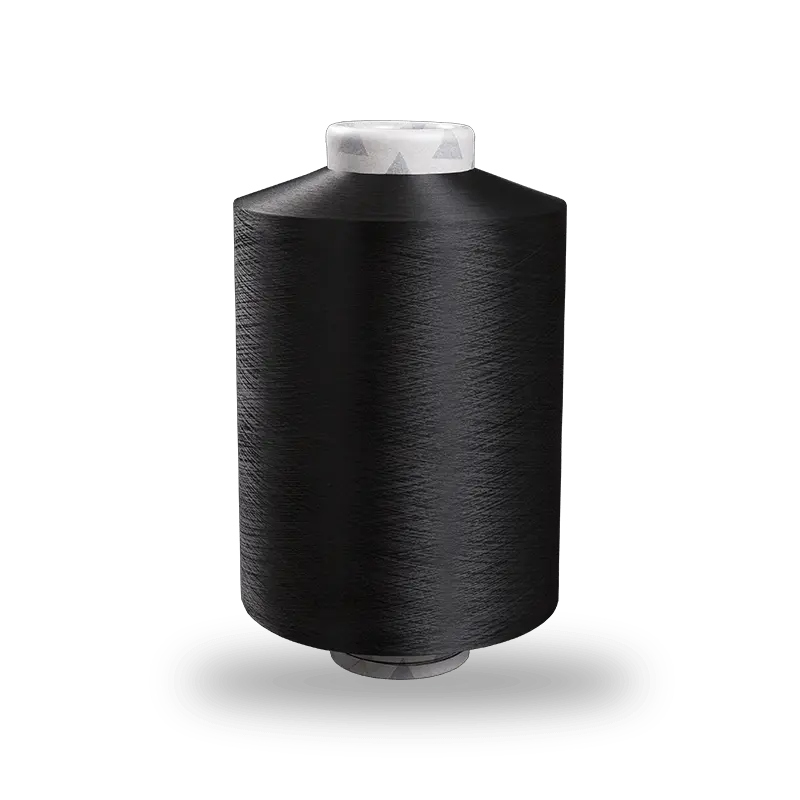 Nylon 6 DTY Sheath Yarn for Stretch FabricsDraw-textured nylon 6 yarn offers softness, cover and elastic compatibility for air-covered spandex and elastic knitted fabrics.View Product →
Our nylon 6 DTY is used as a sheath in air-covered spandex and as a standalone yarn in elastic fabrics. Buyers comparing sheath options can review the product page and request samples in the counts relevant to their line. If color is part of the program, settle the dyeing route early: package dyeing, beam dyeing and garment dyeing can pull a covered yarn in different directions.
A certificate alone does not tell you how a yarn will run. Ask for current test data from the production lot, not just a historical type test. The exact list should follow the risk profile of the finished article, but the following points are a practical starting set.
For medical bandages, add the checks required by your own risk assessment and the converter's quality system. That may include extractables, biocompatibility, sterilization compatibility and lot traceability. Do not assume a general textile certificate covers a medical claim. The supplier should explain what was tested, on which lot, and against which method.
Webbing buyers tend to care about width stability, shrinkage, abrasion, color and hand. A covered yarn that is too lively can cause curling or needle damage; one that is too flat can leave the webbing with poor recovery. Ask for a pilot run on the actual loom width and finishing route. Check how the yarn behaves after the first wash or heat treatment, not only on the cone.
Medical bandages put more weight on consistency, cleanliness and traceability. Compression bandages in particular need predictable elongation at the working tension, because small yarn variations can become large pressure variations across a roll. Retention and support bandages may have different priorities. Buyers should confirm whether the yarn is intended for skin contact, whether a latex-free declaration is needed, and how the finished device will be sterilized. This article on how spandex ACY combines nylon and spandex gives product teams a useful technical companion when comparing air-covered options.
In both segments, avoid specifying only a yarn count. A count without covering method, draft, twist, interlace and heat history is incomplete. That is why two yarns with the same denier can behave like different products on the machine.
Use the following checklist during sampling and supplier qualification. It is deliberately practical; the goal is to uncover process gaps before they appear in a purchase order.
Covered yarn is a small part of the finished article by weight, but it can carry a large share of the performance risk. The best supplier conversations start with the machine and the finished product, not with a price per kilogram. Bring your webbing width, bandage construction, target elongation and finishing route to the table. A spinner can then propose a construction that has a realistic chance of running well.
At Century ChenXing, our operations cover nylon 6 POY, DTY and FDY, spandex air-covered yarn and spun yarns, with annual capacity of around 170,000 tons and GRS certification. Our team works with webbing mills, knitters and bandage converters who need consistent yarn and clear communication. We would rather test a sample against your line than promise a specification that looks good only on paper.
If you are sourcing covered yarn for elastic webbing or medical bandages, start with a clear end-use brief, a small sample plan and a supplier who will show you the test data behind the yarn. That approach will not remove every risk, but it will make the important ones visible early.
+86-(0)572-6295569
+86-193 5712 3632
# 1, Fuqian Street, Si'an Town, Changxing County, Huzhou City, Zhejiang Province, China.