English
 中文简体
中文简体 Español
 عربى
عربى
News
Content
- 1 Why Nylon Dominates Performance Sportswear
- 2 Understanding Denier: The Most Important Starting Point
- 3 Textured vs. Flat Yarn: Choosing the Right Structure
- 4 Functional Finishes and Yarn Compatibility
- 5 Nylon 6 vs. Nylon 6,6: Which to Specify
- 6 Recycled Nylon Options: Performance Without Compromise
- 7 Practical Checklist for Yarn Selection
Choosing the right nylon yarn for sportswear manufacturing comes down to three core factors: fiber denier, yarn construction (textured vs. flat), and functional finish compatibility. Get these right, and your fabric will perform under real athletic conditions — managing moisture, resisting abrasion, and holding its shape wash after wash. This guide walks through each decision point with the specifics manufacturers actually need.
Why Nylon Dominates Performance Sportswear
Nylon (polyamide) has been the backbone of activewear since the 1970s, and its dominance isn't nostalgia — it's performance data. Compared to polyester, nylon offers superior abrasion resistance (roughly 10× more durable by Martindale test cycles), better elasticity recovery, and a softer hand feel that athletes actually notice during extended wear.
Key properties that make nylon essential for sportswear:
- Tensile strength: 4.5–8.5 g/denier, making it resistant to tearing during high-movement activities
- Elastic recovery: returns to original shape after stretching up to 8–16%, critical for compression garments
- Moisture absorption: ~4% (vs. polyester's ~0.4%), enabling better tactile comfort against skin
- Dye affinity: accepts acid and disperse dyes with excellent color depth and wash fastness
Nylon 6 and Nylon 6,6 are the two main types in commercial use. Nylon 6,6 melts at ~265°C vs. Nylon 6's ~220°C, giving it better heat resistance for finishing processes, though Nylon 6 is softer and more widely available at lower cost.
Understanding Denier: The Most Important Starting Point
Denier (D) describes the mass in grams of 9,000 meters of yarn. It's the single most influential specification for how a sportswear fabric will look, feel, and perform. Selecting the wrong denier is one of the most common and costly mistakes in fabric sourcing.
Denier Ranges and Their Sportswear Applications
| Denier Range | Fabric Weight | Typical Use | Example Garment |
|---|---|---|---|
| 15D–30D | Ultra-light | Sheer compression, next-to-skin | Running tights, base layers |
| 40D–70D | Light | Swimwear, yoga pants, cycling shorts | Bikinis, leggings |
| 100D–150D | Mid-weight | Training shorts, sports bras, jerseys | Football kits, gym shorts |
| 200D–420D | Heavy | Outerwear, bags, technical panels | Windbreakers, backpacks |
Filament count also matters within the same denier. A 70D/72f yarn (72 filaments) will feel significantly softer than a 70D/24f yarn, because finer individual filaments create a silkier surface. For premium activewear, higher filament counts in the 40D–70D range are standard practice.
Textured vs. Flat Yarn: Choosing the Right Structure
Beyond denier, the physical structure of the yarn determines stretch behavior, bulk, and surface texture in the final fabric.
Draw Textured Yarn (DTY)
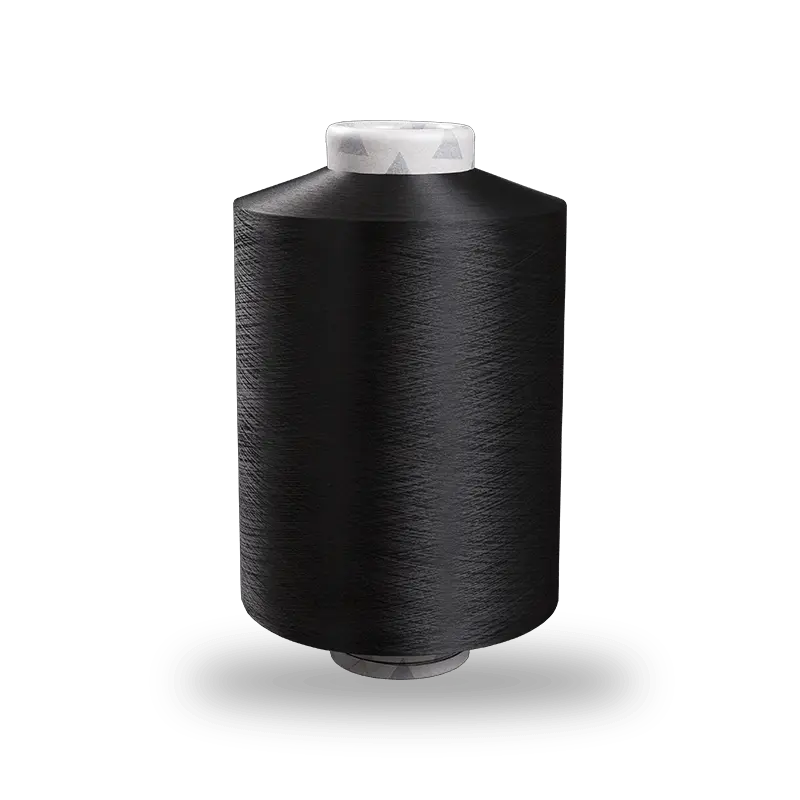
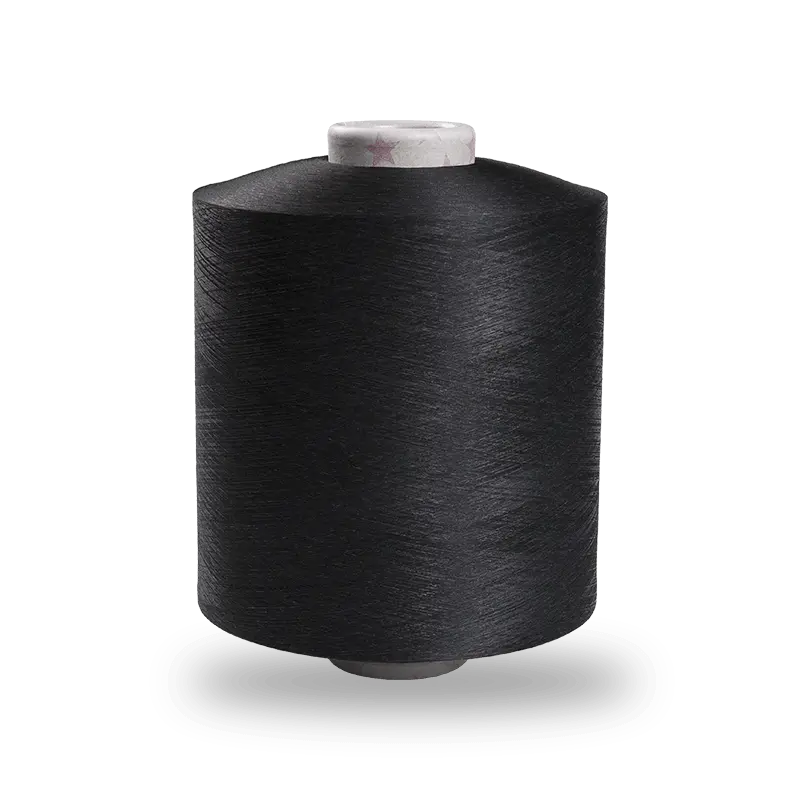
DTY nylon is the most common choice for knit sportswear. The false-twist texturing process introduces a coil-like crimp into the filaments, giving the yarn inherent stretch and bulk. Most nylon DTY for activewear runs between 40D and 150D, and it's ideal for:
- Circular knit leggings and tights
- Sports bras requiring 4-way stretch
- Swimwear with spandex blends
Fully Oriented Yarn (FOY) / Flat Yarn
Flat nylon yarn has no crimp, resulting in a smooth, lustrous surface with minimal bulk. It's used where a sleek, technical appearance is prioritized — woven shell fabrics for jackets, liners, or outerwear panels. Flat yarn woven at high density creates fabrics with wind and water resistance without lamination, a key advantage for ultralight shell construction.
Air-Covered and Covered Spandex (Nylon + Elastane)
For compression sportswear, nylon is often used as a covering yarn around a spandex core. The two main formats are:
- Single-covered (SCY): one nylon wrap around spandex — lower cost, suitable for moderate compression
- Double-covered (DCY): two opposing wraps — higher torque balance, used in medical-grade compression and premium performance hosiery
A standard formulation for compression leggings might use 40D nylon covering 20D spandex in SCY format, offering a 25–35% stretch with full recovery.
Functional Finishes and Yarn Compatibility
Most high-performance sportswear requires finishing treatments — moisture management, antimicrobial protection, UV resistance, or DWR (durable water repellency). Not all nylon yarn grades accept these finishes equally well.
Moisture Wicking
Standard round-cross-section nylon relies on capillary action between filaments. Modified cross-section yarns — such as trilobal, pentalobal, or W-shaped profiles — dramatically increase surface area and wicking speed. Brands like Nilit's Breeze or Invista's Coolmax-compatible nylon offer purpose-engineered wicking geometries. If moisture management is a key spec, confirm the yarn's cross-section profile before ordering.
Antimicrobial Treatment
Nylon is naturally less prone to bacterial odor than polyester due to its higher moisture absorption, but extended-wear sportswear (gym kits, base layers) still benefits from antimicrobial finishing. Two approaches apply:
- Yarn-level treatment: silver-ion or zinc-pyrithione embedded during fiber extrusion — permanent, wash-durable up to 50+ cycles (e.g., Nylstar's Meryl Skinlife)
- Fabric-level finish: applied during dyeing or finishing — lower cost but typically rated for 20–30 wash cycles
DWR and Outerwear Finishes
For woven nylon shells, DWR coatings require a minimum fabric weight and tight weave density to be effective. Fabrics below 50 gsm rarely hold DWR treatments through repeated washing. When specifying nylon for coated outerwear, target a base fabric weight of 60–80 gsm before lamination.
Nylon 6 vs. Nylon 6,6: Which to Specify
Both types are widely used, but the differences are meaningful at the manufacturing level:
| Property | Nylon 6 | Nylon 6,6 |
|---|---|---|
| Melting Point | ~220°C | ~265°C |
| Abrasion Resistance | High | Higher |
| Hand Feel | Softer | Slightly stiffer |
| Dye Uptake | Better (lower temp) | Requires higher temp |
| Cost | Lower | 10–20% premium |
| Common Use | Swimwear, leggings, bras | Outerwear, high-abrasion zones |
For most knit sportswear (leggings, sports bras, swimwear), Nylon 6 is the practical default — softer, easier to dye, and sufficient in durability. Nylon 6,6 is worth the cost premium in applications where thermal stability and long-term abrasion resistance are genuinely critical, such as technical outerwear or footwear uppers.
Recycled Nylon Options: Performance Without Compromise
Recycled nylon — primarily from fishing nets, carpet waste, and pre-consumer fiber — has matured significantly as a manufacturing input. ECONYL® (Aquafil) and Repreve® Nylon are now used in major sportswear brands at full commercial scale, including Adidas, Patagonia, and Stella McCartney.
From a technical standpoint, certified recycled nylon yarn is largely equivalent to virgin Nylon 6 in terms of tensile strength, elongation, and dyeability. The main manufacturing considerations are:
- Price premium: typically 15–25% above virgin Nylon 6, narrowing as supply chains scale
- Color consistency: slight lot-to-lot variation is more common; request tighter COA tolerances
- Certification: verify GRS (Global Recycled Standard) certification to support sustainability claims and buyer requirements
For brands targeting the mid-to-premium activewear segment, recycled nylon is now a standard specification rather than a niche choice.
Practical Checklist for Yarn Selection
Before committing to a nylon yarn specification, work through these questions with your supplier:
- What is the target fabric weight and end-use activity? This determines your denier range.
- Is stretch required in the knit structure or only from spandex blending? This determines DTY vs. flat yarn.
- What functional finishes will be applied, and at what stage? Confirm yarn compatibility with wicking, antimicrobial, or DWR treatments.
- What are the wash durability requirements? Drives the choice between yarn-level vs. fabric-level functional treatments.
- Is sustainability certification required by the buyer? Specify GRS-certified recycled nylon if so.
- What color depth and vibrancy is needed? Nylon 6 dyes more easily; high-saturation colors may require acid dye optimization.
- What are the heat-setting and finishing temperatures in your process? Verify compatibility with Nylon 6 vs. 6,6 melting thresholds.
Running physical trials on small-batch fabrics before committing to bulk yarn orders remains the most reliable way to validate these specifications against real-world knitting, dyeing, and finishing conditions.