English
 中文简体
中文简体 Español
 عربى
عربى
News
Content
- 1 Direct Answer: The Essence of Nylon 6 Pre-Oriented Yarn
- 2 The Melt Spinning Route from Nylon 6 Chips
- 3 How Process Variables Dictate POY Orientation and Properties
- 4 Structural and Mechanical Profile of Nylon 6 POY
- 5 Comparative Data: POY versus Fully Drawn Yarn
- 6 Downstream Texturing and Key End‑Uses
- 7 Practical Quality Management and Troubleshooting
Direct Answer: The Essence of Nylon 6 Pre-Oriented Yarn
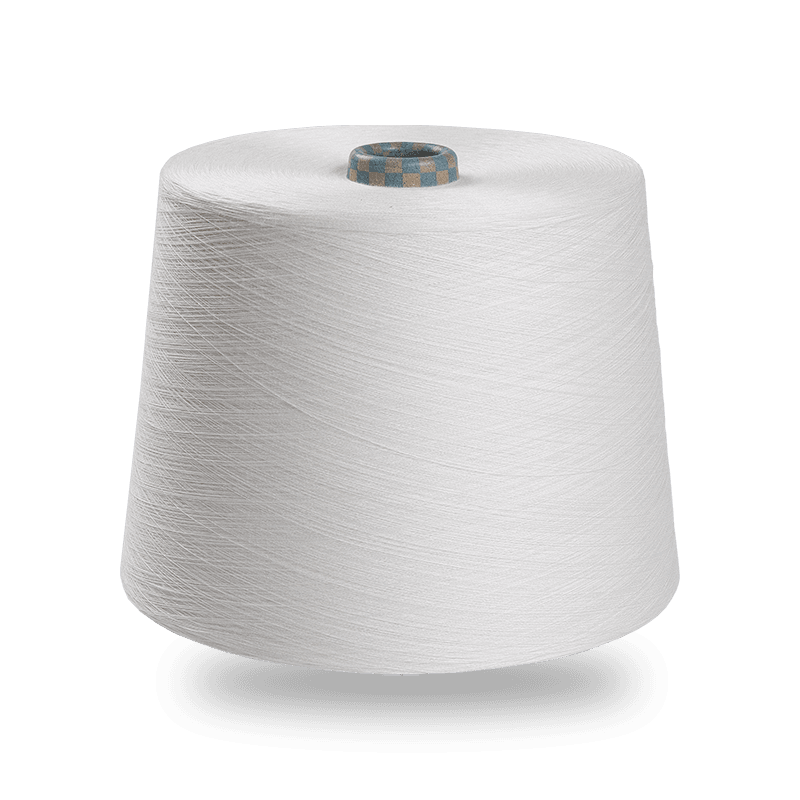
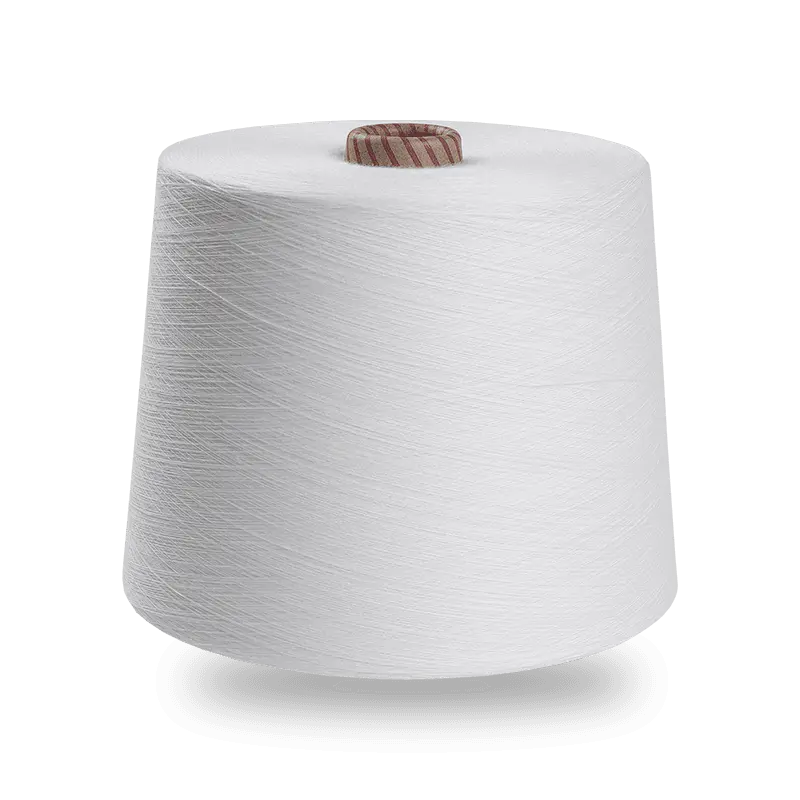
Nylon 6 pre-oriented yarn (POY) is a partially oriented filament yarn produced by melting nylon 6 polymer chips and extruding them through spinnerets, then solidifying the filaments under precisely controlled cooling. The resulting yarn carries an intentional degree of molecular alignment—typically 60–80% of the orientation found in fully drawn yarn—which makes it uniquely suited for high-speed draw-texturing. Characteristic tenacity falls between 3.5 and 4.5 cN/dtex, while elongation at break stays in the 100–150% range, providing the ductility needed for further processing.
The Melt Spinning Route from Nylon 6 Chips
Chip Drying and Melting
Nylon 6 chips are hygroscopic; residual moisture must be driven below 0.02% (200 ppm) before melting to prevent hydrolytic degradation. Drying is typically carried out in closed-loop dehumidified air dryers at 80–90°C for 4–6 hours. The dried chips are then fed into an extruder where they melt at 250–270°C, forming a homogeneous polymer melt.
Filtration and Extrusion
The melt passes through fine filtration media (typically 15–25 µm absolute rating) to remove gels and contaminants. It is then metered by a spin pump and forced through a spinneret containing precision capillaries. Capillary diameters commonly range from 0.15 to 0.30 mm, depending on the target filament count and denier.
Controlled Quenching and Solidification
As the filaments exit the spinneret, they enter a quench chamber where laminar cross‑flow air at 18–22°C and a velocity of 0.4–0.8 m/s cools them rapidly. The cooling gradient sets the through‑thickness structure: a skin‑core morphology that directly influences orientation. At this stage, the filaments are still largely amorphous but already show significant chain alignment along the fiber axis.
Take‑Up and Winding
The solidified yarn is drawn by a godet set and wound onto bobbins at speeds of 2,500–3,500 m/min. It is exactly this high take‑up speed that induces pre‑orientation; below 2,000 m/min the yarn remains essentially undrawn (LOY), while above 4,000 m/min the orientation approaches that of a fully drawn yarn. Nylon 6 POY is therefore delivered as a stable, partially oriented package ready for false‑twist texturing.
How Process Variables Dictate POY Orientation and Properties
Every production variable leaves a signature on the yarn’s molecular structure and final performance. The table below summarises the most influential parameters and their observed effects when shifting from a baseline condition.
| Parameter | Typical change | Effect on orientation | Effect on tenacity |
|---|---|---|---|
| Spinning speed | Increase from 2,800 → 3,400 m/min | Marked rise (birefringence +0.012) | +0.6 cN/dtex |
| Melt temperature | Rise from 255 → 270°C | Slight decrease (relaxation) | Minor drop |
| Quench air temperature | Decrease 22 → 16°C | Higher skin orientation | +0.3 cN/dtex |
| Quench duct length | Extended by 200 mm | More uniform radial orientation | Slightly higher |
Beyond these variables, inter‑filament evenness is tightly linked to spin‑finish application. The oil‑on‑yarn level is typically maintained at 0.4–0.8%, which prevents static build‑up and ensures smooth unwinding during texturing.
Structural and Mechanical Profile of Nylon 6 POY
- Birefringence (Δn): 0.035–0.055, indicating moderate chain alignment.
- Crystallinity index: 25–35% (mostly α‑form), leaving a sizable amorphous fraction for subsequent draw.
- Tenacity: 3.5–4.5 cN/dtex, sufficient for high‑speed unwinding yet low enough to allow draw.
- Elongation at break: 100–150%, delivering the ductility required by false‑twist texturing.
- Boiling water shrinkage: 8–12%, reflecting the frozen‑in stress from rapid quenching.
- Uster evenness (CVm%): well‑controlled POY packages hold 1.0–1.5% at a 1‑minute test length.
The combination of oriented amorphous regions and limited crystallinity is what makes POY “pre‑oriented”: the yarn is already stiff enough to handle but still extensible enough to be drawn and heat‑set during texturing.
Comparative Data: POY versus Fully Drawn Yarn
Understanding the gap between POY and FDY clarifies why POY is the preferred feed for texturing. The table below contrasts key attributes for a common 70 denier/24 filament nylon 6 yarn.
| Property | POY | FDY |
|---|---|---|
| Tenacity (cN/dtex) | 3.8 – 4.5 | 4.5 – 5.5 |
| Elongation (%) | 110 – 150 | 30 – 45 |
| Boiling water shrinkage (%) | 9 – 12 | 6 – 8 |
| Birefringence (Δn) | 0.040 – 0.055 | 0.055 – 0.065 |
| Crystallinity (%) | 25 – 35 | 40 – 50 |
The higher elongation and lower crystallinity of POY are precisely what allow draw‑texturing machines to apply 1.3× to 1.7× draw ratios while simultaneously heat‑setting the crimp, producing the final textured yarn with excellent bulk and recovery.
Downstream Texturing and Key End‑Uses
Nylon 6 POY is consumed almost exclusively as feed for false‑twist texturing (DTY). During texturing, the yarn is drawn, twisted, heat‑set in a heater track at 190–215°C, and untwisted, creating a permanent helical crimp. The resulting drawn textured yarn delivers the soft hand and stretch required by:
- Activewear and sportswear (leggings, swimwear, base layers)
- Hosiery and sock yarns, where comfort stretch is essential
- Seamless garments and lingerie
- Lining fabrics and light‑weight outerwear
- Automotive trims that demand high abrasion resistance
A small fraction of POY is also air‑jet textured to produce bulky, spun‑like yarns for upholstery and luggage fabrics.
Practical Quality Management and Troubleshooting
Consistent POY quality depends on rigorous monitoring. Common defects and their root causes are listed below.
| Defect | Likely cause | Corrective measure |
|---|---|---|
| Broken filaments / drip defects | Contaminated melt or excessive polymer degradation | Increase filter change frequency, verify melt residence time |
| High Uster CVm% | Uneven quench, pump surges, or damaged spinneret holes | Optimise quench uniformity, replace spin pump, inspect spinneret |
| Excessive oil pickup variation | Oil roller wear or unstable finish concentration | Calibrate metering pump, maintain finish tank temperature |
| Low package hardness | Insufficient winding tension or traverse pattern disturbance | Adjust contact pressure, verify traverse guide alignment |
Two process analytics that deliver the highest return are online tension monitoring at the winder and regular birefringence testing. Tension deviation exceeding ±0.05 cN/dtex often signals a drift in quench conditions or spin-pump delivery, while a birefringence drop below 0.038 usually means the pre‑orientation is insufficient for high‑speed texturing, leading to filament breaks.
Finally, all POY packages should undergo a conditioning period at controlled humidity (55–65% RH) for at least 24 hours before texturing. This allows stress relaxation and moisture equilibration, reducing the risk of package collapse and static‑induced yarn breaks during unwinding.