English
 中文简体
中文简体 Español
 عربى
عربى
News
Content
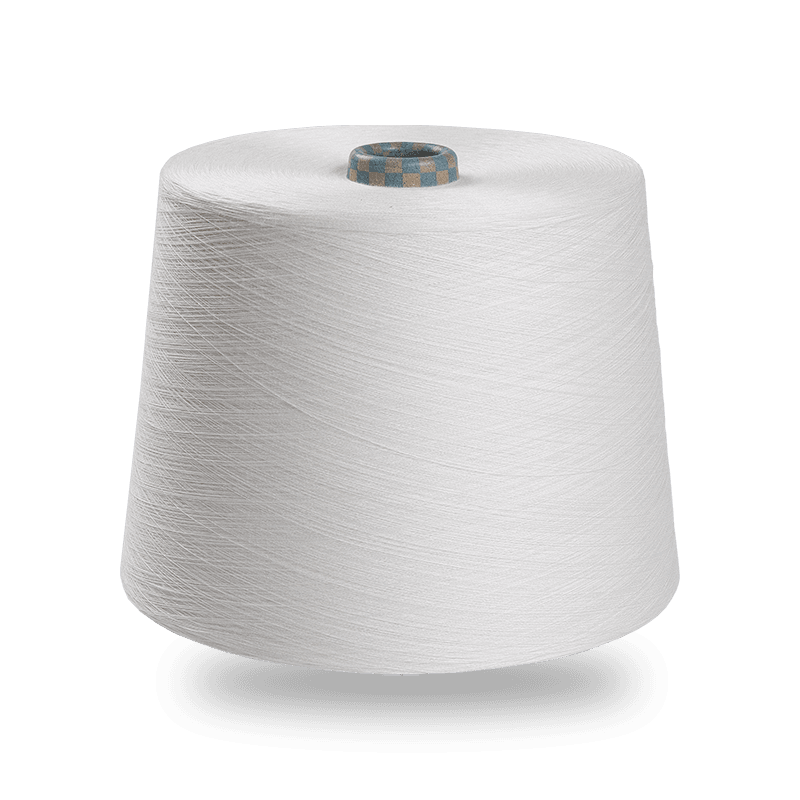
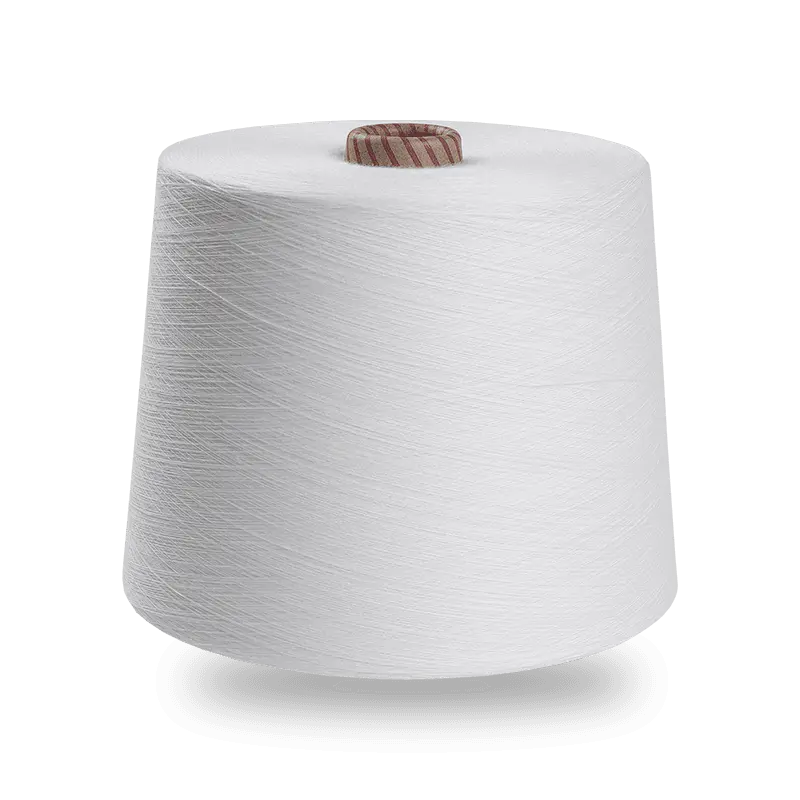
In the textile industry, the term "POY silk" appears constantly in yarn catalogs, fabric specifications, and procurement discussions. It refers not to natural silk from silkworms, but to a category of high-speed spun synthetic filament yarn engineered to replicate the luster, drape, and smooth hand feel of genuine silk — at a fraction of the cost and with far greater consistency. Understanding POY silk is essential for anyone sourcing fabrics, specifying yarn, or developing textile products that depend on silk-like aesthetics and performance.
What Is POY Silk?
POY stands for Partially Oriented Yarn — a filament yarn produced by melt-spinning synthetic polymers (most commonly polyester PET or nylon 6) at high speeds, typically between 3,000 and 4,000 meters per minute. At these speeds, the polymer molecular chains become partially aligned along the fiber axis, creating a yarn that is incompletely drawn. This "partial orientation" is precisely what gives POY its unique position in the textile supply chain: it retains significant residual elongation and thermoplasticity, making it the ideal feedstock for downstream texturing and drawing processes.
The "silk" in POY silk refers to the yarn's visual and tactile characteristics. Polyester POY, especially in its bright or semi-dull variants, produces filaments with a smooth, glossy surface that scatters light similarly to natural silk. When woven into fabrics such as satin, taffeta, or chiffon, POY-based textiles can closely mimic the sheen and fluid drape that consumers associate with luxury silk — which is why the term "simulated silk" or "imitation silk" fabric is built almost entirely on POY as its raw material.
It is important to distinguish POY silk from natural mulberry silk. Natural silk is a protein fiber secreted by Bombyx mori silkworms, with unique triangular cross-sections that create its characteristic shimmer. POY silk is a manufactured synthetic fiber that approximates these optical and tactile qualities through engineering, not biology. The two serve overlapping markets but are fundamentally different materials with different care requirements, cost structures, and performance profiles.
How POY Silk Is Manufactured
The production of POY silk follows a well-established melt-spinning process, governed by precise control of temperature, speed, and polymer composition at every stage.
- Raw material preparation: Polyester PET chips (produced from purified terephthalic acid, PTA, and monoethylene glycol, MEG) or nylon 6 chips are dried to remove moisture, which would otherwise cause hydrolytic degradation during melting. Moisture content must be reduced to below 30 ppm for polyester before spinning begins.
- Melt extrusion: The dried chips are fed into an extruder where they are melted at temperatures of 280–295°C (for polyester) and pumped through a metering gear pump to ensure consistent flow rate. The melt is then forced through a spinneret — a precision metal plate with hundreds of microscopic holes — forming continuous filaments.
- Quenching and oiling: The extruded filaments pass through a cross-flow air quench zone where they solidify rapidly. A spin-finish oil is applied to reduce static charge and friction, essential for smooth downstream processing.
- High-speed winding: The filaments are converged into a bundle and wound onto bobbins at speeds of 3,000–4,000 m/min. This winding speed is the defining factor: it is fast enough to partially orient the molecular chains but not so fast as to fully draw them. The result is POY — a yarn with controlled orientation, moderate tenacity, and high residual elongation.
One of the most important process variables in POY silk production is the addition of titanium dioxide (TiO₂) as a delustering agent. By controlling TiO₂ content, manufacturers produce three distinct luster grades:
- Bright (full luster): No TiO₂ added. Maximum gloss, closest to natural silk sheen. Used for satin, evening wear, and luxury linings.
- Semi-dull: TiO₂ content of approximately 0.3%. Moderate luster suitable for general apparel, sportswear, and home textiles.
- Full dull: TiO₂ content of approximately 2.0%. Matte appearance resembling cotton or wool. Used for functional fabrics and technical textiles where glare reduction is needed.
Key Properties of POY Silk
POY silk occupies a specific performance window that defines both its advantages and its limitations as a textile material. The following table compares its core properties against natural silk:
| Property | POY Silk (Polyester) | Natural Mulberry Silk |
|---|---|---|
| Tenacity | 2.0–2.8 g/den (moderate) | 3.5–5.0 g/den (high) |
| Elongation at break | 110–160% (high residual) | 15–25% (low) |
| Moisture regain | 0.4% (very low) | 10–11% (high) |
| Luster | High (bright grade) | Natural, multi-tonal sheen |
| Wrinkle resistance | Excellent | Poor to moderate |
| Dyeability | Good (disperse dyes) | Excellent (acid dyes) |
| Heat resistance | Softens at ~250°C | Degrades above 170°C |
| Cost (relative) | Low | Very high |
The high elongation of POY (typically above 110%) is its most defining characteristic. This residual stretchability is what makes it processable into DTY (Draw Textured Yarn) through false-twist texturing — a process that is impossible with fully drawn yarns. The low moisture regain of polyester POY means it dries quickly and resists mold, making it practical for activewear and outdoor textiles, though it is less breathable than natural silk or cotton.
POY vs DTY vs FDY: Which Should You Choose?
POY, DTY, and FDY are not competing products — they represent three stages of a processing continuum. Understanding where each sits in the supply chain clarifies which form is appropriate for a given application.
| Parameter | POY | DTY | FDY |
|---|---|---|---|
| Full name | Partially Oriented Yarn | Draw Textured Yarn | Fully Drawn Yarn |
| Spinning speed | 3,000–4,000 m/min | Downstream of POY | 4,500–6,000 m/min |
| Elongation at break | 110–160% | 25–40% | 25–35% |
| Tenacity | Moderate (2.0–2.8 g/den) | Moderate–High | High (3.5–5.5 g/den) |
| Appearance | Straight, smooth filaments | Crimped, bulky, elastic | Straight, smooth, uniform |
| Hand feel | Smooth (requires processing) | Soft, elastic, wool-like | Smooth, silky, firm |
| Ready for direct weaving? | No (intermediate product) | Yes | Yes |
| Primary use | Feedstock for DTY/FDY | Knitwear, sportswear, fleece | Woven silk-like fabrics, linings |
POY is the upstream intermediate. It is sold to texturing mills that convert it into nylon 6 DTY (through false-twist texturing, which adds crimp and elasticity) or draw-warped into warp beams for direct weaving. Nylon 6 POY follows the same logic in nylon-based supply chains, where the partially oriented nylon filament is the essential precursor for producing elastic, silk-smooth nylon hosiery, lingerie, and activewear fabrics.
If you are a fabric mill buying yarn for direct weaving of smooth, satin-surface textiles, FDY is your product. If you are a texturing operation converting POY into elastic knit yarn, POY is your raw material. If you are sourcing finished yarn for knitwear or stretch fabric, DTY is the appropriate form.
Applications of POY Silk in Textiles
POY silk — either as a feedstock converted into FDY or DTY, or occasionally used directly in draw-warping — underpins a wide range of end-use textile categories.
- Simulated silk woven fabrics: Polyester taffeta, satin, chiffon, crepe de chine, and habotai-style fabrics are produced from bright or semi-dull FDY originating from POY. These fabrics dominate the mid-market apparel and linings sector globally, offering silk-like aesthetics at accessible price points.
- Knitwear and hosiery: DTY derived from POY is the primary yarn for circular knit and warp knit fabrics used in T-shirts, sportswear, swimwear, and fine-gauge hosiery. Its elasticity and softness after texturing make it ideal for close-fitting garments.
- Home textiles: Curtain fabrics, duvet covers, pillowcases, and decorative upholstery fabrics frequently use POY-derived yarns. The combination of luster, wrinkle resistance, and easy-care properties makes POY silk suitable for bedding products across all market segments.
- Functional and performance fabrics: By modifying cross-sectional geometry or adding functional additives during melt spinning, POY silk can be engineered for moisture wicking, UV resistance, flame retardancy, and antibacterial performance — capabilities that natural silk cannot match without chemical finishing.
- Blended yarn systems: POY filament can be combined with spun staple fiber components. For example, compact siro spun yarn blending viscose or nylon staple with filament cores creates hybrid yarns that balance the smoothness of filament silk with the body and warmth of staple fiber — suitable for premium suiting, shirting, and workwear.
How to Select the Right POY Silk Specification
Selecting a POY silk specification requires matching four key parameters to your downstream process and end-product requirements: denier, filament count, luster grade, and polymer type.
- Denier (linear density): Denier (D) measures the weight in grams of 9,000 meters of yarn. Common POY silk specifications include 75D, 100D, 150D, 300D, and 450D. Lower denier produces finer, lighter fabrics with superior drape (75D/100D for chiffon and fine linings); higher denier delivers more body and cover (150D/300D for outerwear and home textiles).
- Filament count: A 150D/48F yarn contains 48 individual filaments, each approximately 3.1 denier. More filaments per denier (higher filament count at the same total denier) produces a softer, silkier hand feel because the individual filaments are finer. Micro-filament POY (below 1 denier per filament) achieves the closest approximation to natural silk softness.
- Luster grade: For luxury apparel and evening wear, specify bright POY. For everyday apparel and sportswear, semi-dull is the industry standard. For technical or industrial end uses where surface glare is undesirable, full-dull POY is appropriate.
- Polymer type — polyester vs. nylon: Polyester POY is the cost-effective standard for most woven simulated-silk applications. Nylon 6 POY produces yarns with superior softness, higher moisture absorption (4.5% vs. 0.4% for polyester), and better dyeability with acid dyes, making it the preferred choice for hosiery, lingerie, swimwear, and any application where skin-contact comfort is a priority. Nylon POY carries a cost premium of approximately 40–60% over polyester POY but enables fabric aesthetics and performance that polyester cannot fully replicate.
When evaluating suppliers, request the following quality indicators for each POY silk lot: denier CV% (coefficient of variation) for uniformity, elongation at break to confirm processability, oil content for texturing compatibility, and bobbins per pallet consistency for winding quality. Consistent POY quality directly determines the uniformity, dye levelness, and processing efficiency of every fabric produced downstream.