English
 中文简体
中文简体 Español
 عربى
عربى
News
Content
What Is Raw White Yarn and Why It Matters in Textile Manufacturing
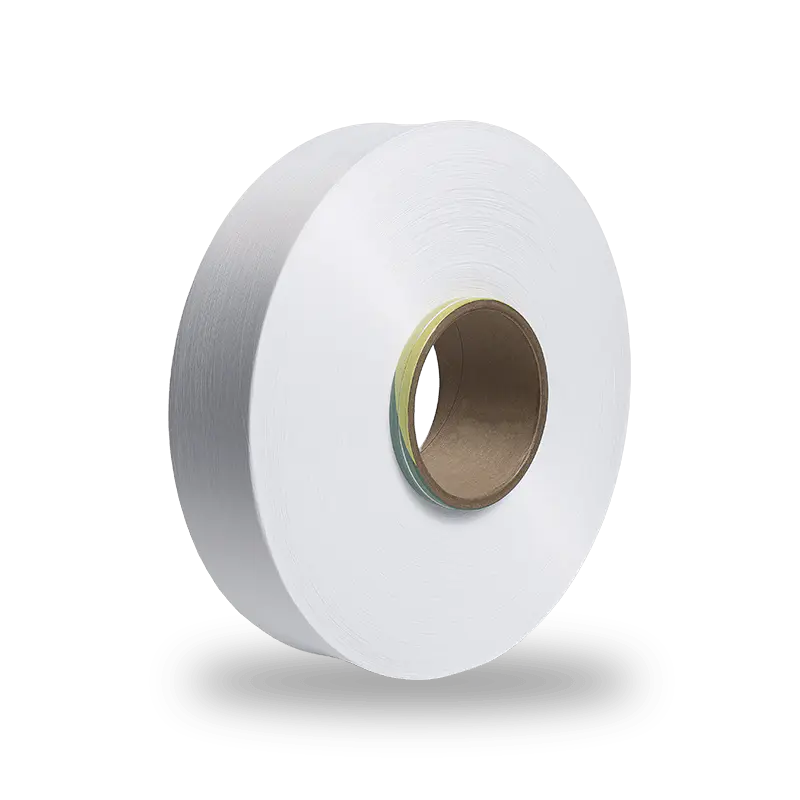
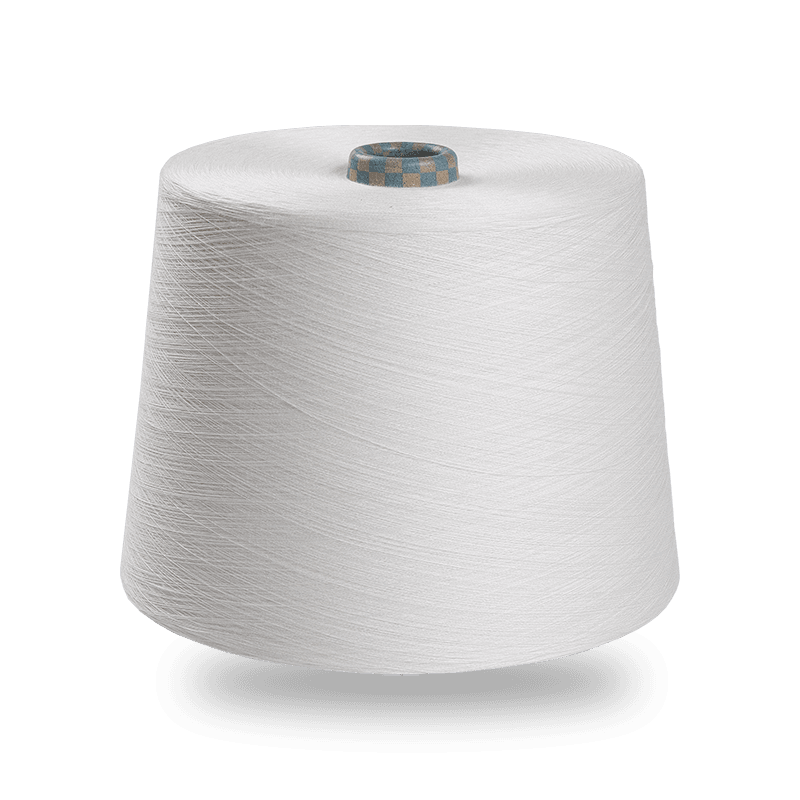
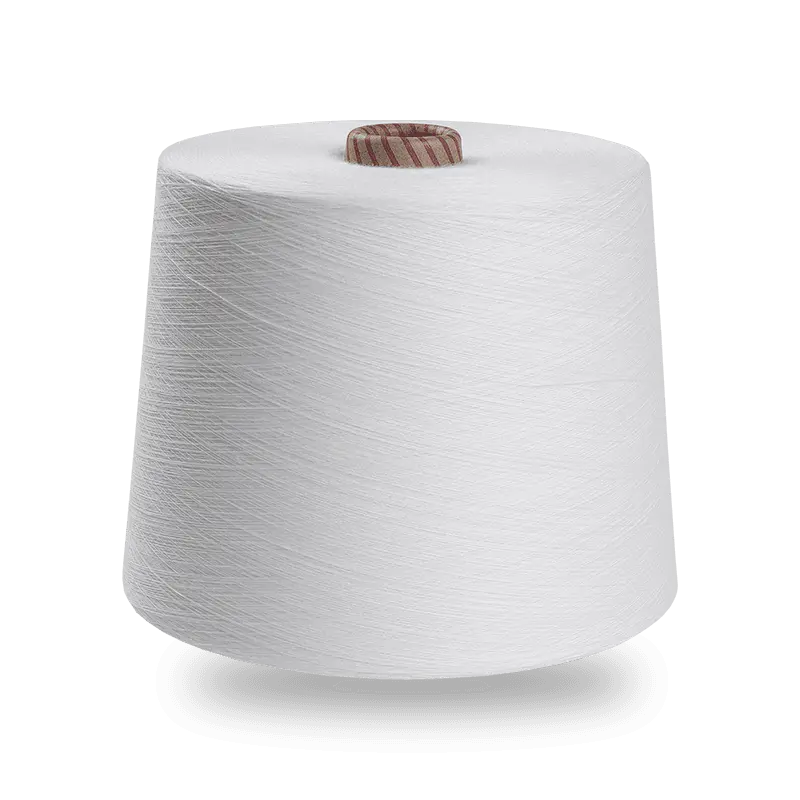
Raw white yarn is yarn in its natural, undyed, and unbleached state — spun from fiber but not subjected to any color treatment. The term "raw white" refers to the yarn's base appearance straight off the spinning machine: a clean, off-white or creamy tone that retains the fiber's inherent color before any dyeing or finishing process is applied. It sits at the very beginning of the textile value chain, and the decisions made at this stage ripple through every step that follows.
The distinction between raw white, bleached white, and dyed yarn matters more than most buyers initially realize. Bleached yarn has undergone chemical treatment to achieve a brighter, standardized white — a process that can affect tensile strength and dye uptake if not properly controlled. Raw white yarn skips this step entirely, preserving fiber integrity and giving downstream processors maximum flexibility. Whether the end use calls for reactive dyeing, vat dyeing, or printing on woven fabric, starting from raw white means fewer variables and more consistent results.
The global yarn market was valued at approximately USD 37.92 billion in 2025 and is projected to reach USD 46.49 billion by 2031, according to industry analysis on global yarn market growth and fiber trends. Within this landscape, raw white yarn serves as the foundational input for a broad range of finished goods — from apparel knits to industrial fabrics — making it one of the most consistently sourced commodity categories in textile procurement.
Types of Raw White Yarn by Fiber
Fiber type is the first fork in the road when sourcing raw white yarn. Each category behaves differently in spinning, dyeing, and end-use performance, and the right choice depends entirely on what the fabric needs to do.
Cotton raw white yarn is produced either as carded or combed, in single or folded constructions. Carded cotton yarn retains more short fibers and suits medium-grade knitwear, towels, and casual apparel. Combed cotton yarn undergoes an additional step that removes short fibers and straightens the remaining ones, producing a smoother, stronger yarn preferred for premium T-shirts, fine shirting, and high-thread-count home textiles. Count range typically spans NE 10s to NE 40s for standard applications, with finer counts available for specialty end uses. For buyers seeking a tighter structure with reduced hairiness, compact siro-spun yarn for fine-count applications delivers measurably better surface quality on the final fabric.
Polyester and nylon raw white yarn — produced as POY, FDY, or DTY — are technically classified as semi-dull or full-dull in their raw state, giving them a matte, natural appearance before any dyeing. Nylon 6 FDY, for instance, offers high tenacity, excellent dye affinity, and dimensional stability that make it a workhorse for warp-knitted lingerie, hosiery, and performance outerwear. Buyers specifying yarn for high-speed warp-knitting lines should evaluate nylon 6 FDY filament yarn for warp-knitting applications against their denier and filament count requirements before committing to volume.
Blended raw white yarns — such as polyester-cotton, cotton-viscose, or nylon-spandex combinations — bring together the performance properties of two fibers in a single yarn. These are particularly common in activewear and stretch fabric categories, where moisture management and recovery are equally important. A covered spandex yarn used as the core within a nylon shell is the standard construction for four-way stretch fabrics.
Key Specifications to Evaluate Before Sourcing
Yarn count and construction are where sourcing decisions get technical. For cotton and staple fiber yarns, count is expressed in the English system (NE or Ne): the higher the number, the finer the yarn. A 30s single cotton yarn is finer than a 20s, and a 30s/2 (two-ply) has the diameter of a 15s single with twice the strength. For filament yarns — polyester, nylon — count is expressed in denier (D) or decitex (dtex), where lower numbers indicate finer yarns. A 40D/24F nylon FDY has 40 denier total and 24 filaments.
Twist level and twist direction (S or Z) affect both the yarn's handle and its performance in knitting or weaving. Higher twist typically means better abrasion resistance and a harder hand; lower twist gives a softer, more voluminous feel. For ring-spun yarn used in single-jersey knits, twist multiplier is a critical spec that should be confirmed with the mill before sampling. Buyers working with ring-spun cotton yarn for knit fabric production should specify twist multiplier alongside count and ply in their purchase order.
Single yarn vs. plied yarn is another practical decision. Singles are lighter and less expensive; plied yarns offer better strength and evenness, making them better suited for weaving warps and technical applications where yarn breakage would be costly. Most woven fabrics — shirting, denim, workwear — use plied yarn in the warp and may use singles in the weft.
Quality Standards and Testing for Raw White Yarn
Quality in raw white yarn is measurable, and buyers who skip lab testing at the sampling stage often discover problems only after the fabric is knitted or woven — at which point remediation is expensive. The core parameters to verify are count accuracy, tensile strength, elongation at break, evenness (CV%), hairiness index, and imperfections (thin places, thick places, neps per kilometer).
Evenness (CV%) is the single most important indicator of spinning quality for staple fiber yarns. A CV% above the acceptable threshold for a given count creates visible streaks in the finished fabric — particularly damaging for solid-color dyeing, where uneven dye uptake becomes immediately apparent. For premium apparel applications, CV% should be confirmed on a Uster Tester or equivalent instrument, with results benchmarked against Uster Statistics for the relevant count and fiber type.
Hairiness affects pilling performance and dye penetration uniformity. Siro spinning technology was specifically developed to address this — the process produces yarn with a tighter fiber bundle and measurably lower hairiness than conventional ring spinning. If fabric surface quality is a priority, specifying siro-spun yarn with lower hairiness and higher evenness is a technically sound choice, particularly for fine-gauge knits and high-thread-count wovens where surface defects are visually amplified.
For cotton yarn, whiteness index (measured under standardized illumination) matters when the downstream process involves reactive or vat dyeing on pale shades. A raw white yarn with inconsistent base whiteness will produce shade variation lot to lot. Requesting whiteness index data from the mill — not just a visual comparison — protects against this.
Common Applications of Raw White Yarn
Raw white yarn feeds into virtually every category of textile manufacturing. Understanding where it typically goes helps buyers frame supplier conversations around the right specifications from the start.
Knitted fabric production — single jersey, interlock, rib, and fleece — accounts for the largest volume of raw white cotton yarn consumption globally. Most T-shirt fabric, underwear base cloth, and casualwear knits start as raw white yarn that is knitted into greige fabric, then piece-dyed in a jet dyeing machine. This workflow gives brands maximum color flexibility without holding large yarn inventories across many shades.
Woven greige fabric for shirting, bedding, and denim typically uses raw white yarn in both warp and weft. The greige fabric is then either yarn-dyed at the yarn stage (for products like chambray or Oxford weave) or piece-dyed after weaving. In indigo denim production, the warp yarn is rope-dyed before weaving — a specialized application that still starts from raw white ring-spun cotton yarn.
Stretch and performance fabrics increasingly rely on covered spandex constructions where a raw white nylon or polyester yarn is wrapped around a spandex core. The resulting covered yarn is then knitted into swimwear, shapewear, and activewear fabrics. Spandex-covered nylon yarn for stretch fabrics is the standard construction for four-way stretch applications requiring both recovery and dye uniformity.
Home textiles — towels, bed sheets, and decorative fabrics — rely heavily on combed raw white cotton yarn at counts ranging from NE 20s to NE 60s. Towel constructions typically use a coarser loop pile yarn combined with a finer ground yarn, both sourced as raw white and dyed together in the finishing process for consistent shade matching.
How to Choose a Reliable Raw White Yarn Supplier
Production capacity and process control are the two variables that separate reliable raw white yarn suppliers from ones that will cause headaches. A mill running 25,000 kg per day with fully integrated bale management and modern spinning equipment — Rieter, Schlafhorst, Murata — has fundamentally different quality consistency than a smaller operation piecing together production across multiple machines of varying vintage.
Certifications matter more as supply chain transparency requirements increase. OEKO-TEX Standard 100 certification confirms that the yarn has been tested for harmful substances and is safe for skin contact — increasingly a baseline requirement for European and North American apparel brands. GRS (Global Recycled Standard) certification is relevant if the raw white yarn contains recycled fiber content. Requesting copies of current certificates — not just claiming certification — should be standard practice in supplier qualification.
Minimum order quantities (MOQs) vary significantly by mill size and yarn type. Filament yarns like nylon FDY may have MOQs starting from 500 kg per shade or construction; ring-spun cotton yarn from large integrated mills often has MOQs of 1,000 to 5,000 kg per count. For buyers testing a new supplier, negotiating a smaller initial order with a lab dip or physical sample confirmation before committing to full production volume is standard practice — and any supplier worth working with will accommodate this.
Lead time transparency is the final check. A reliable supplier maintains adequate raw material inventory (cotton bale stocks, nylon chips) and can provide honest, specific lead times rather than generic estimates. Confirming production scheduling, shipping documentation capability, and inspection access before placing a large order protects against delays that cascade into fabric and garment production setbacks downstream.