English
 中文简体
中文简体 Español
 عربى
عربى
News
Home / News / Industry News / Choosing Nylon 6 DTY for Hosiery Manufacturing: A Practical Buyer's Guide
Content
Hosiery looks simple on a shelf and behaves anything but simple on a knitting machine. One pair of socks or tights can combine a very fine nylon leg yarn, an elastic core, and a knit structure that stretches hundreds of times a day without going slack. When a mill asks why one style keeps its shape after twenty washes while another sags after five, the answer usually comes back to the same place: which nylon 6 DTY went into it, and how carefully that specification was chosen.
We produce nylon 6 POY, DTY, FDY, spandex covered yarn and spun yarns at Zhejiang Century ChenXing Fiber Technology, with around 30,000 tonnes of DTY capacity a year. We do not knit hosiery ourselves, so we have no reason to push a yarn toward the wrong end use. What we do have is a workshop full of texturing machines and years of conversations with sock, tights and legwear producers about what runs cleanly on their equipment and what does not. This article gathers the questions we go through most often when a hosiery customer is choosing a nylon 6 DTY.
Draw textured yarn is made by false-twisting nylon 6 POY and then heat-setting the twist in place. The filament keeps a permanent helical crimp, so the finished yarn arrives bulky, stretchy and soft instead of flat and glassy. That is precisely the combination legwear needs: enough stretch to follow the leg, enough bulk to cover, and enough softness to sit against skin all day.
Compared with FDY, DTY gives the knitter more cover and more natural extension, which means a lighter yarn can do the same job. Compared with polyester DTY, nylon 6 feels softer, takes dye more deeply for rich black and navy shades, and recovers more readily after being stretched, an obvious advantage in a garment that is pulled on and off daily. Nylon also tolerates fine filament counts well, which is what makes 15D and 20D sheers possible in the first place.
Two DTY yarns can carry the same headline denier and behave completely differently on the machine. These are the values worth confirming before a sample is approved.
If you want a deeper walk-through of how these values are measured and controlled, our technical note on nylon 6 DTY finished product specifications, uses and quality control sets out the testing side in more detail.
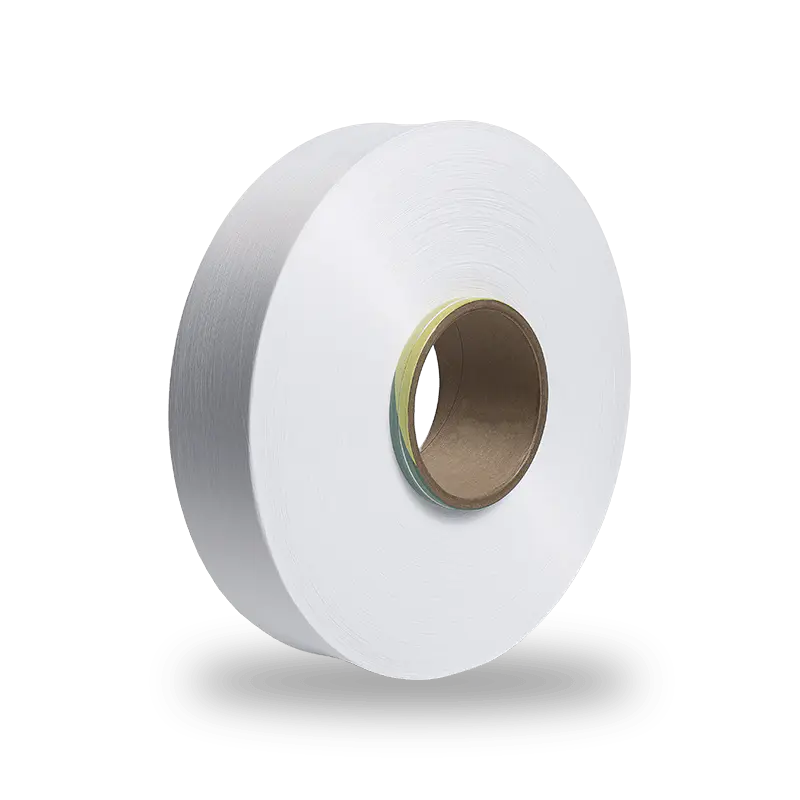
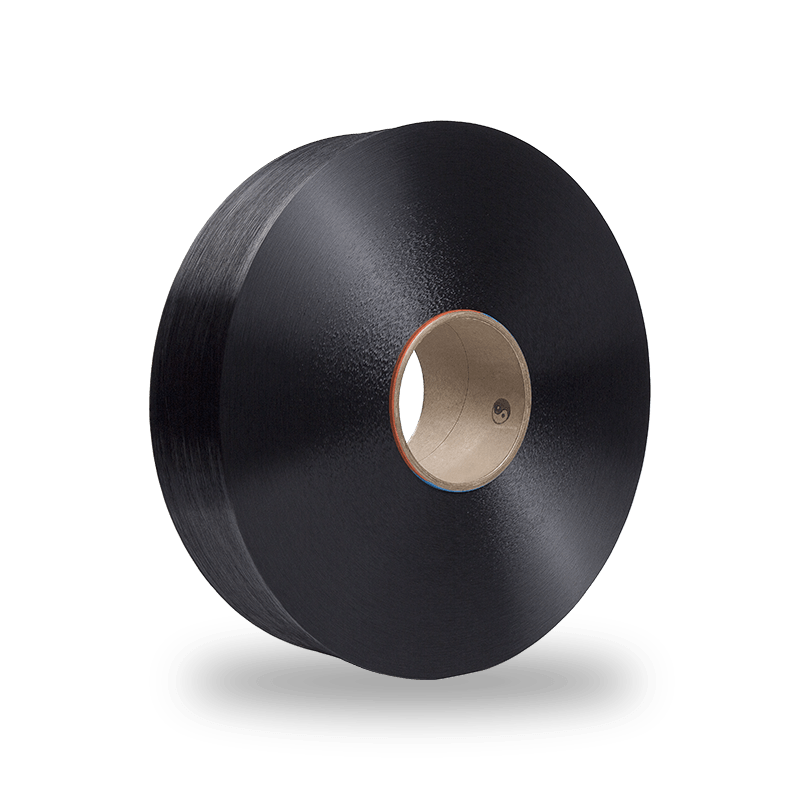
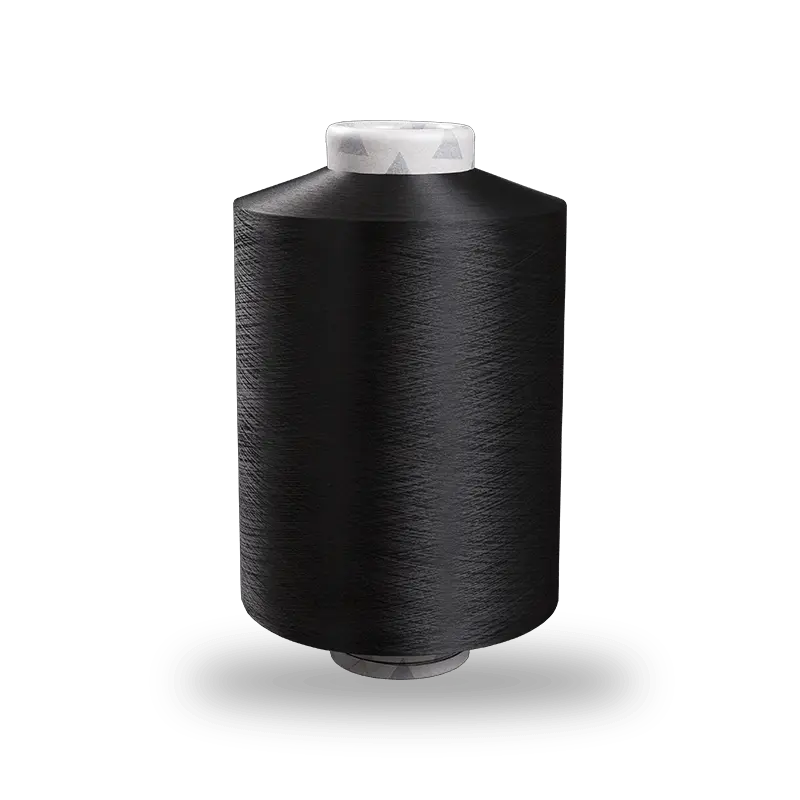 Nylon 6 DTYNylon 6 DTY, also called nylon 6 draw textured yarn, is a kind of nylon filament. It is made of nylon 6 POY, which is stretched and deformed through a false twisting p...View Product →
There is no single "best" DTY for hosiery. There is only the right grade for a given product, machine gauge and finishing route. The table below shows the windows we see most often in production, and it is a starting point for a trial rather than a fixed rule.
| Hosiery product | Typical DTY denier | Filament count | Intermingling | Why it works |
|---|---|---|---|---|
| Sheer pantyhose and 15D to 20D tights | 15D to 20D | 7 to 24 | NIM to SIM | Fine, even yarn for transparent, smooth legs |
| Trouser socks and knee highs | 30D to 40D | 24 to 34 | SIM | Balance of cover, softness and wear life |
| Dress and casual socks | 70D to 100D | 24 to 48 | SIM to HIM | Bulk and abrasion resistance at low cost per pair |
| Sports, hiking and compression socks | 100D to 200D | 36 to 68 | HIM | Strength, cushioning and shape retention under load |
| Seamless leggings and opaque tights | 40D to 70D | 24 to 48 | SIM | Opaque coverage with reliable recovery beside spandex |
Nylon 6 DTY rarely works alone in legwear. Almost every sock, tight and legging relies on a spandex core wrapped by nylon, and the way that core is covered changes how the finished garment behaves. Air covered yarn is softer, more open and better suited to knit structures where a low-profile elastic is wanted, such as fine sheers and dress socks. Single covered yarn gives firmer, more directional hold, which suits compression socks, cuffs and waistbands where a defined grip is the point.
Whichever route you take, the practical variables are the spandex denier, the draw ratio applied during covering, and the nylon outer layer denier. A 20D spandex core covered with 30D nylon behaves very differently from a 40D core with 70D nylon, even when both are described simply as "nylon spandex". Ask your supplier for the full construction, not just the yarn name.
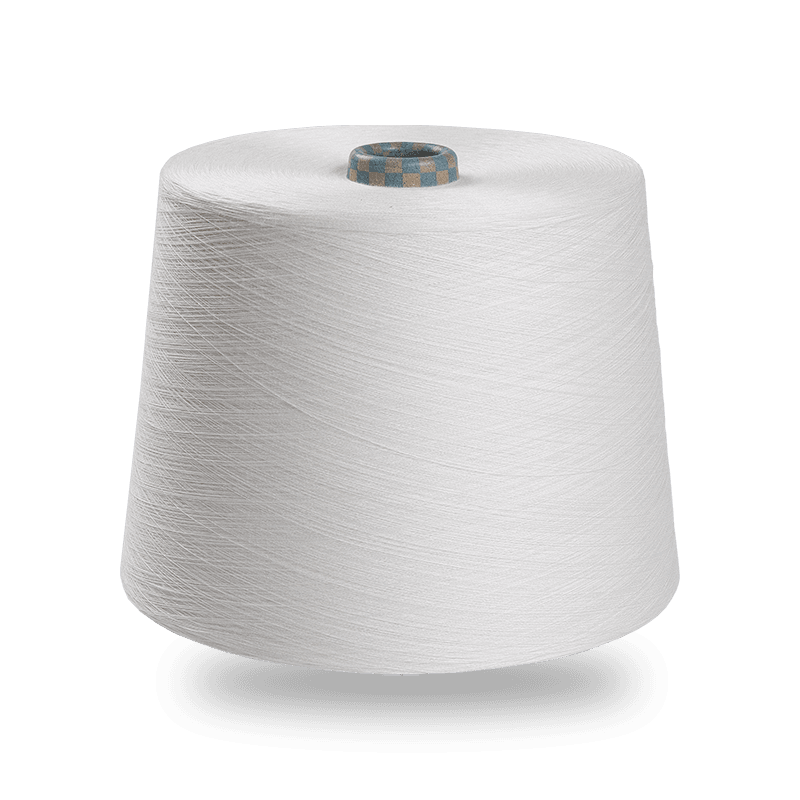
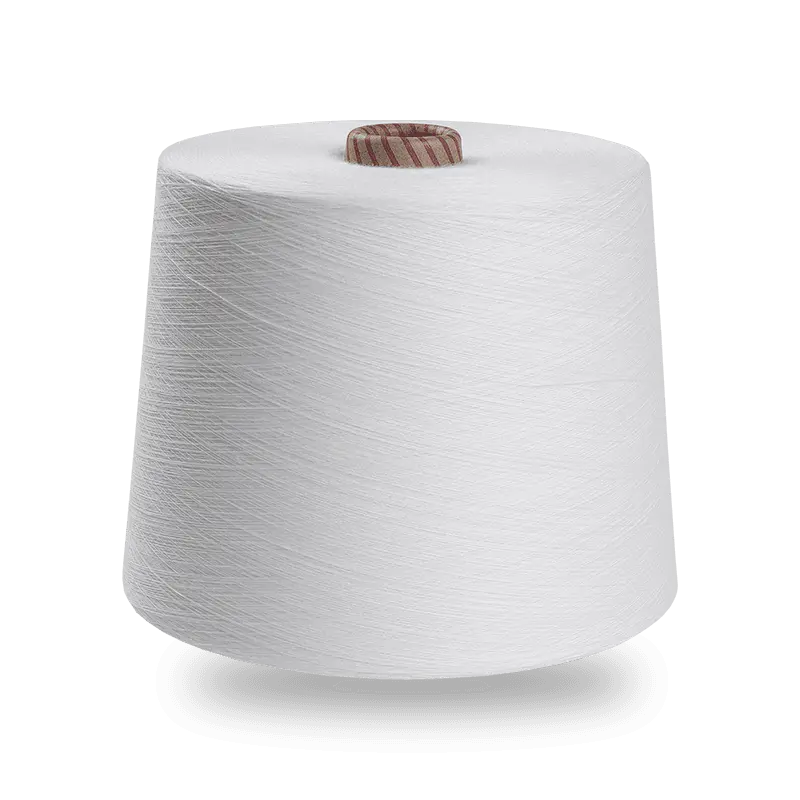
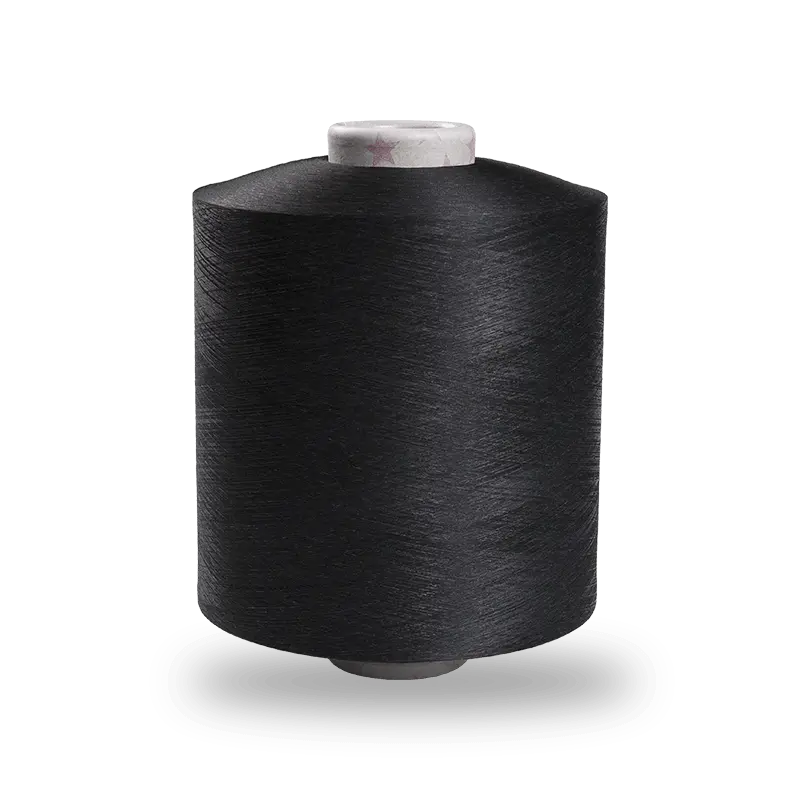 Spandex ACYCentury Chenxing mainly produces air-covered yarn. It is a yarn that uses outer fiber nylon filament and spandex yarn through a nozzle and uses air pressure to cover t...View Product →
Once the specification is settled, the conversation shifts to consistency and delivery. A hosiery line that runs the same yarn every week notices small changes quickly, so it is worth asking a few direct questions before committing to volume.
Ask about total capacity and how it is structured, whether the supplier textures its own POY or buys on the open market, which certifications are held, and how quality data is recorded lot by lot. Our own answer, for what it is worth, is set out on our company profile: roughly 340 mu of production space, more than 1,000 employees, an annual output of about 170,000 tonnes across the product range, a provincial research and development centre, and GRS certification for recycled content. The DTY line alone runs at about 30,000 tonnes a year on high-speed false-twist texturing machines, with automated winding and an integrated production and quality control model. None of that replaces a trial, but it does tell you whether the supplier can hold the same standard on the tenth container as on the first sample.
Choosing nylon 6 DTY for hosiery is ultimately a matching exercise. The yarn has to suit the product, the machine and the finishing route at the same time, and the numbers on the spec sheet are the language for that conversation. If you are working through a new style, send us the denier, filament count, intermingling level and the fabric you are aiming for, and we will suggest a grade from our nylon 6 DTY range together with a covered yarn construction if the style needs elastic. A sample package and a technical discussion usually settle in a week what a catalogue cannot settle at all.
Nylon 6 Chips Explained: A Buyer's Guide to Quality, Viscosity, and Yarn Performance
Which Nylon and Spandex Yarns Are Used in Seamless Underwear? A Buyer's Guide
+86-(0)572-6295569
+86-193 5712 3632
# 1, Fuqian Street, Si'an Town, Changxing County, Huzhou City, Zhejiang Province, China.