English
 中文简体
中文简体 Español
 عربى
عربى
News
Home / News / Industry News / Which Nylon and Spandex Yarns Are Used in Seamless Underwear? A Buyer's Guide
Content
Seamless underwear looks simple on the shelf, but the yarn behind it is anything but random. A single tube of fabric has to stretch in every direction, recover without sagging, stay smooth against skin that moves all day, and survive dozens of wash cycles. That performance comes from a small, carefully matched family of yarns, and the two names at the center of it are nylon and spandex.
So which nylon and spandex yarns are used in seamless underwear? In practice, the short answer is nylon 6 draw textured yarn (DTY), nylon 6 fully drawn yarn (FDY), and air covered yarn built from a spandex core with a nylon sheath. The longer answer depends on the zone of the garment, the machine gauge, and the compression the finished piece must deliver. This guide walks through each yarn, where it belongs, and the specifications worth locking down before a bulk order is placed.
A seamless circular knitting machine forms an entire garment in one continuous tube, with the waistband, body, and leg openings created by changing stitch structure rather than by cutting and sewing panels together. Needle counts are high, loops are small, and yarn is fed under steady tension from the first course to the last. Any inconsistency in elongation, oil pick-up, or intermingling shows up immediately as barré lines, dropped stitches, or a garment that twists after washing.
Two practical consequences follow. First, seamless underwear runs on fine counts, generally between 20D and 100D, because coarse yarns cannot form small, dense loops without creating bulk and pressure points. Second, the finished fabric is almost always a blend: nylon supplies strength, coverage, and dyeability, while spandex supplies stretch and recovery. Most commercial seamless underwear sits roughly between 80 and 92 percent nylon and 8 and 20 percent spandex.
Nylon 6, or polyamide 6, is the workhorse filament for seamless knits. It can be spun into very fine deniers, it has high tensile strength and abrasion resistance at low weight, it takes dye evenly, and it has enough natural resilience to move with the body between the spandex filaments. Because the same polymer can be delivered as POY, DTY, or FDY, a buyer can tune the fabric hand without changing the fiber chemistry.
Draw textured yarn is the single most common nylon yarn in seamless underwear. False-twist texturing gives the filament a crimped, bulky structure, so a relatively fine yarn fills the loop and produces a soft, opaque fabric with a pleasant hand. Typical counts are 40D/34F and 40D/24F for light, second-skin styles, and 70D/68F or 70D/48F for firmer body panels and control garments. Intermingling level matters here: NIM, SIM, and HIM grades change how tightly the filaments are bound, which affects knitting efficiency, fabric appearance, and behavior in the needle zone.
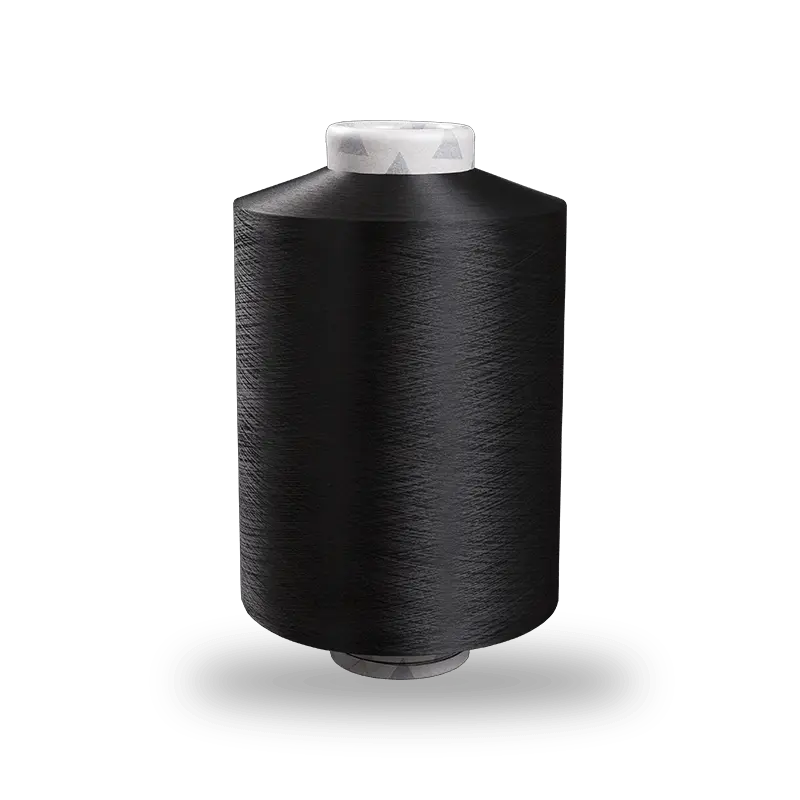 Nylon 6 DTYNylon 6 DTY, also called nylon 6 draw textured yarn, is a kind of nylon filament. It is made of nylon 6 POY, which is stretched and deformed through a false twisting p...View Product →
When a seamless brief feels smooth, matte, and slightly peachy, a semi-dull nylon 6 DTY is usually doing the work.
Fully drawn yarn is spun, drawn, and heat set in one continuous route, so it arrives flat, smooth, and strong with a clean surface. It has less bulk than DTY but better dimensional stability and a crisper appearance. In seamless underwear, FDY is typically used in fine counts such as 20D/24F, 30D/12F, and 40D/12F, and it appears in three places: lightweight sheer panels, plated structures where a smooth face is required, and waistbands or leg openings that need firmness rather than loft. Bright and semi-dull variants are selected according to the target luster.
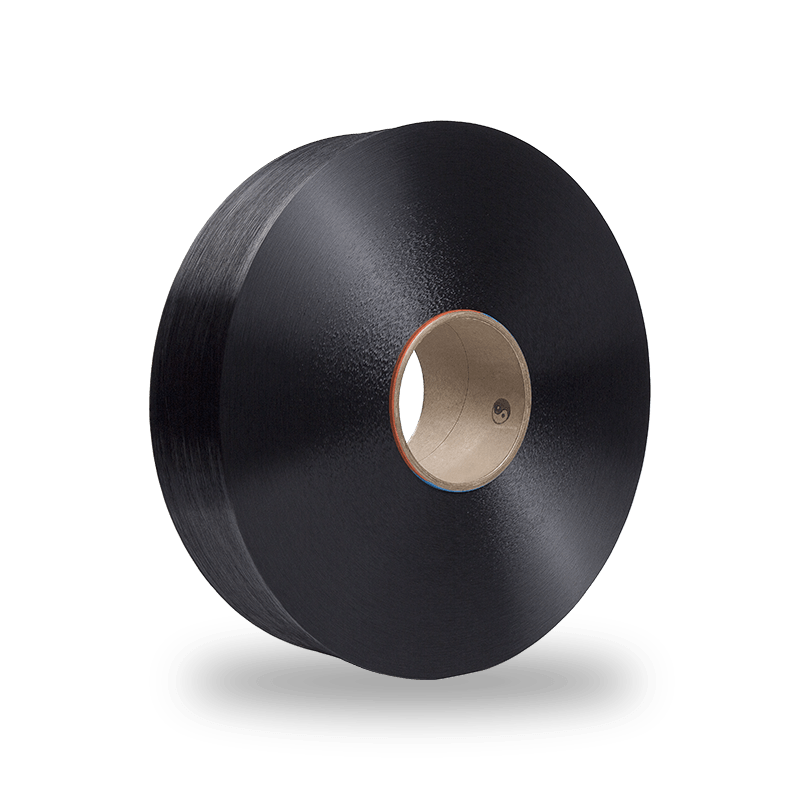
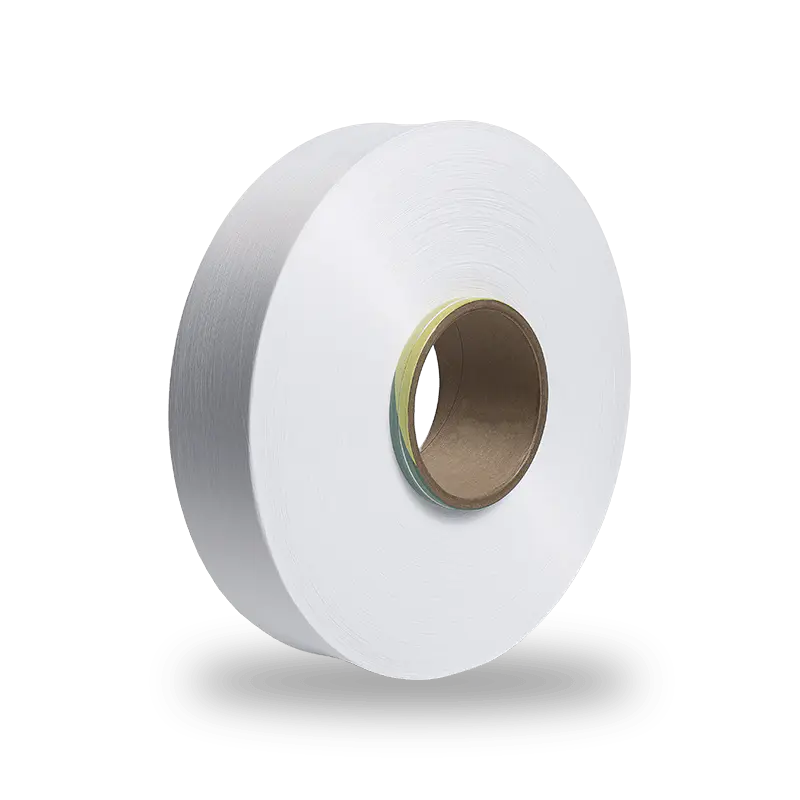 Nylon 6 FDYNylon 6 fully drawn yarn (FDY) is a type of nylon filament.View Product →
Pre-oriented yarn is not normally knitted straight into underwear. It is a semi-finished filament that is later texturized into DTY, and its spinning uniformity, oil pick-up, and molecular orientation set the ceiling for the textured yarn that follows. Buyers rarely specify POY directly, but when a supplier spins POY and texturizes it in the same plant, lot-to-lot consistency across a long production run is far easier to hold.
Spandex, also called elastane, can extend to several times its original length and snap back. Bare spandex in 20D, 30D, or 40D is used in some seamless constructions, but it is delicate, sensitive to tension variation, and difficult to feed at high speed on its own. For that reason, most seamless underwear is knitted from a covered yarn that wraps the spandex core in a nylon sheath, protecting the elastane and stabilizing the stretch.
ACY is made by feeding a spandex core and a nylon 6 DTY sheath through an air jet, which intermingles the two into a single package without adding twist. The result is soft, low in residual torque, and highly extensible, which is exactly what a seamless body panel needs. Specifications are usually written as spandex denier followed by nylon denier: 2070 (20D spandex with 70D nylon), 3070, 4070, and 4040 are common in underwear. Lower spandex denier gives a lighter, gentler stretch; higher spandex denier gives firmer support. For a closer look at how the nylon-covered spandex behaves in dyeing and recovery, our technical note on spandex covered nylon yarn properties and applications is a useful companion read.
When the yarn is covered by twisting a filament around the spandex core, the result is a tighter, firmer structure with less give at low tension. Single covered yarn uses one wrap direction; double covered yarn wraps in two opposing directions, which balances torque and improves recovery under sustained load. These constructions are chosen for waistbands, leg openings, and shaping zones where the fabric must hold position instead of relaxing into the body.
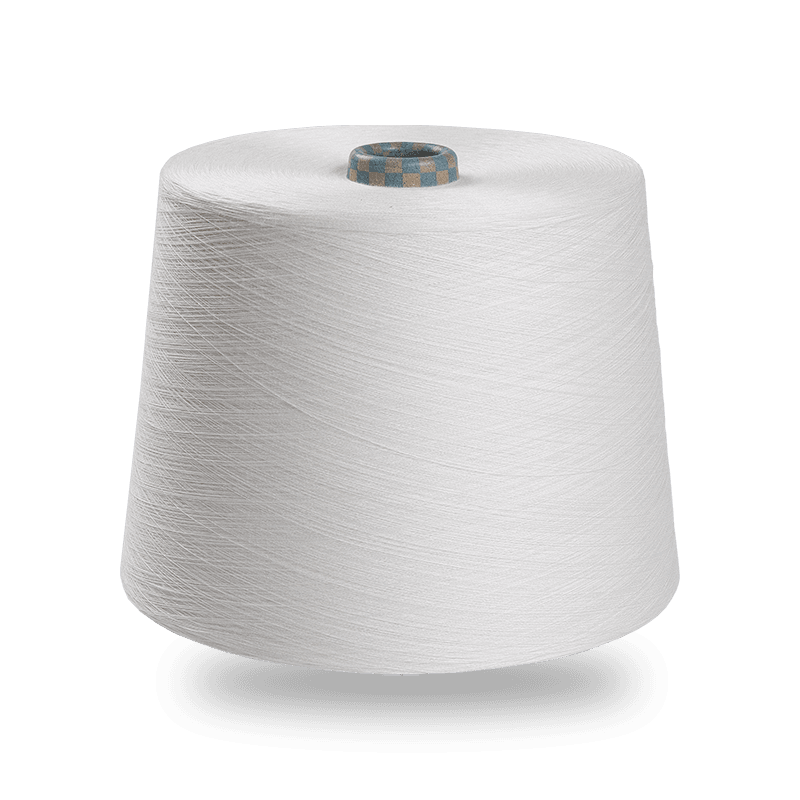
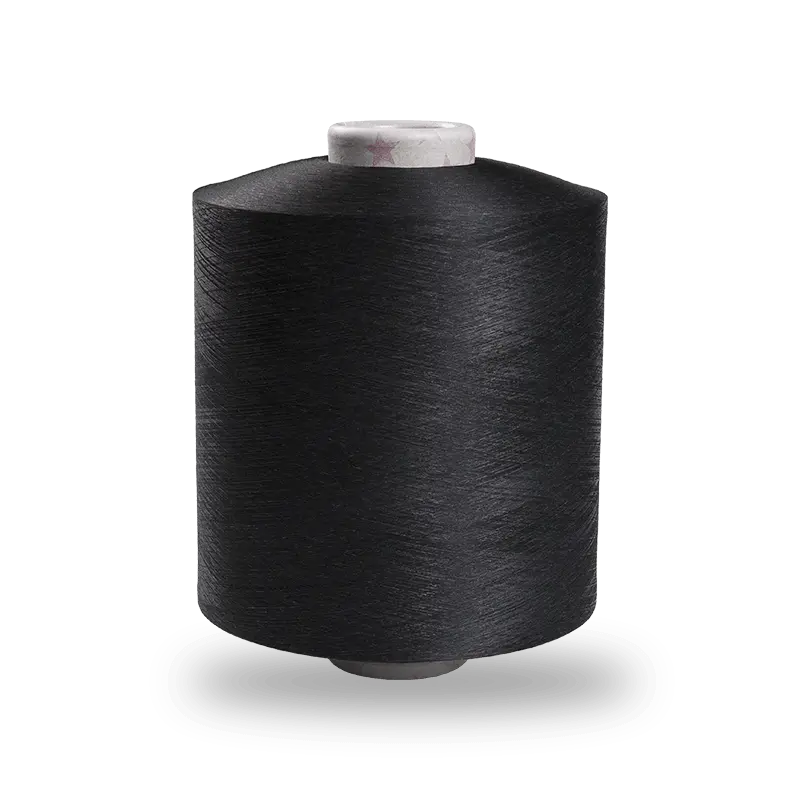 Spandex ACYCentury Chenxing mainly produces air-covered yarn. It is a yarn that uses outer fiber nylon filament and spandex yarn through a nozzle and uses air pressure to cover t...View Product →
Elastane ratio is the other half of the equation. Below roughly 5 percent spandex, the fabric offers gentle stretch and a relaxed fit. Between 8 and 12 percent, seamless briefs and bras get the all-way stretch and recovery consumers expect. Above about 15 percent, the fabric becomes a compression material suited to shaping and performance wear. Matching that ratio to the garment's purpose matters more than chasing the highest spandex content available.
Seamless construction lets one tube carry several different mechanical jobs. The table below summarizes how mills commonly pair nylon and spandex yarns across those zones.
| Garment zone | Nylon component | Elastic component | Why this pairing |
|---|---|---|---|
| Body or torso panel | Nylon 6 DTY 40D/34F or 70D/68F | ACY 2070 or 3070 | Soft opacity with smooth all-way stretch |
| Waistband | Nylon 6 FDY 30D/12F or 40D/12F | SCY 3070 or 4070 | Firm grip with low creep and no rolling |
| Leg opening and hem | Nylon 6 FDY 20D/24F | SCY 2070 | Clean edge that stays flat on the skin |
| Gusset and lining | Nylon 6 DTY 70D/68F | ACY 2070 | Durability and moisture handling |
| Shaping or control panel | Nylon 6 DTY 70D/48F | DCY 4070 | Higher compression with reliable recovery |
Two yarns can share the same denier and still behave differently on the machine. Filament count per denier controls softness and cover, intermingling controls cohesion and unwinding, and texturing parameters control crimp and bulk. These are the numbers worth pinning down in a tech pack or purchase specification.
| Yarn type | Typical specification | Main contribution |
|---|---|---|
| Nylon 6 DTY | 40D/34F SIM, 70D/68F NIM | Soft hand, bulk, opacity |
| Nylon 6 FDY | 20D/24F SD, 30D/12F BR | Smooth surface, high tenacity |
| Nylon 6 POY | 45D/12F, 68D/24F | Feedstock for in-house texturing |
| Spandex ACY | 2070, 3070, 4070 | Soft stretch for body panels |
| Spandex SCY | 2070, 3070 | Firm twist-covered recovery |
| Recycled grades | GRS-certified DTY and ACY | Same processing route, documented content |
Seamless knitting forgives very little, so incoming inspection should be built around the properties that cause visible defects rather than around appearance alone. A practical checklist for a first shipment includes:
Running these checks on sample packages before production protects both the knitting efficiency and the fit consistency of the finished garment.
Zhejiang Century ChenXing Fiber Technology Co., Ltd. spins nylon 6 and processes it into the exact yarn forms seamless underwear requires. The company's publicly stated annual capacity of about 170,000 tons covers nylon 6 POY, nylon 6 DTY, nylon 6 FDY, spandex covered yarn, and spun yarns, so a single supplier can cover a body panel, a waistband, and a gusset without splitting the order across several vendors. GRS certification supports recycled-content programs, and a provincial-level high technology research and development center backs the technical work behind custom counts and intermingling levels.
For mills and brands that want one qualified source for the nylon and spandex side of a seamless program, more detail on the production base and quality system is available on our company profile page.
Seamless underwear is built on nylon 6 DTY for soft, opaque body panels, nylon 6 FDY for fine, smooth, and structurally firm zones, and spandex covered yarn, whether air covered or twist covered, for the stretch that makes the garment fit. Around 8 to 12 percent spandex is the sweet spot for everyday briefs and bras, with higher elastane content reserved for shaping and performance styles. Get the denier, filament count, intermingling, and coverage right, and the fabric does the rest.
+86-(0)572-6295569
+86-193 5712 3632
# 1, Fuqian Street, Si'an Town, Changxing County, Huzhou City, Zhejiang Province, China.