English
 中文简体
中文简体 Español
 عربى
عربى
News
Content
What Are Nylon 6 DTY Intermingling Levels?
When a sourcing manager specifies NIM, SIM, or HIM for nylon 6 DTY, they are defining the yarn’s intermingling density—the number of compressed-air knots that hold the filaments together. These knots replace traditional twist, giving the yarn enough cohesion to run smoothly on high-speed warp knitting machines or water-jet looms without additional sizing. Nylon 6 DTY, with its lower filament friction compared to polyester, requires slightly higher air pressure to achieve a stable node, yet once formed, the nodes resist unraveling under tension. This characteristic directly influences downstream processing: a poorly chosen intermingling level can lead to filament breakage, grin-through in fabrics, or uneven dye uptake.
The industry categorizes intermingling into three main grades: no-intermingled (NIM), slight-intermingled (SIM), and high-intermingled (HIM). Each grade delivers a predictable node count per meter, which correlates with the yarn’s compactness, hand feel, and behavior during weaving or knitting. As we detail in our analysis of the impact of intermingling on nylon 6 DTY quality, these node counts are not arbitrary; they directly affect fabric body and surface smoothness.
NIM, SIM, HIM: A Three-Way Comparison
The table below quantifies the critical differences among the three grades. Note that the node count ranges reflect standard practice for nylon 6 DTY; values can be fine-tuned by adjusting air-jet pressure and overfeed during texturing.
| Grade | Node Count (knots/m) | Hand Feel | Weaving Stability | Ideal Applications |
|---|---|---|---|---|
| NIM (No Intermingled) |
0 – 10 | Very soft, flat, high drape | Low; best for low-tension knitting | Lingerie, silk-like linings, soft-touch underwear |
| SIM (Slight Intermingled) |
40 – 50 | Balanced softness with cohesion | Good; suitable for warp knitting and air-jet looms | Activewear, sportswear, shirt fabrics |
| HIM (High Intermingled) |
100 – 120 | Firmer, more compact | Excellent; resists unwinding on water-jet looms | Webbing, backpack straps, heavy-duty sewing thread |
Node Density and Structural Integrity
NIM yarn creates fewer than 10 knots per meter—essentially an open, parallel filament bundle. SIM yarns distribute 40–50 knots per meter, forming periodic cohesive points that maintain filament alignment without sacrificing drape. HIM yarns pack 100–120 knots per meter, locking filaments tightly. For nylon 6, achieving the target node count demands precise control of the intermingling jet pressure because the polymer’s lower glass transition temperature (about 50°C) makes the filaments more pliable during texturing; under-pressurization produces weak “false” nodes that slip apart during warping.
Physical Performance and Fabric Behavior
The intermingling grade directly determines the yarn’s abrasion resistance and pilling tendency. NIM fabrics deliver superior softness but are prone to filament snagging and surface fuzz. SIM offers the best compromise: the spaced nodes reduce filament migration while maintaining a fluid hand, making it the standard choice for high-gauge circular knits. HIM yarns resist abrasion and pilling exceptionally well but can feel stiff against the skin; they are therefore reserved for functional or industrial textiles where durability outweighs tactile appeal.
Processing Efficiency on the Machine
On a Tricot warp knitting machine running at 2,500 rpm, SIM nylon 6 DTY consistently meets efficiency targets without the broken filaments common with NIM. Water-jet weaving exacerbates any tendency to unwind: NIM yarns often filamentate at the shed, causing loom stops, while HIM yarns sail through. For circular knitting, too many nodes can create knit-in defects if the yarn does not relax uniformly, so mills often specify SIM with a tolerance of ±5 knots/m to balance productivity and fabric quality.
How to Select the Right Intermingling Grade for Your Application
Activewear and Sportswear → Target SIM
SIM nylon 6 DTY provides enough filament entangling to prevent grin-through in tight-fitting leggings and compression tops, yet preserves the stretch and moisture transport that athletes expect. Dyeing uniformity is also better than with NIM because the evenly spaced knots reduce shadowing effects in deep shades. Most sportswear brands spec SIM as the default, and fabric mills adjust the node count closer to 40 or 50 knots/m depending on the knit structure.
Silk-Substitute and Soft-Touch Lingerie → Consider NIM
NIM yarns produce the flattest, sleekest fabric surface, ideal for high-end lingerie and smooth lining materials. However, to compensate for weak cohesion, manufacturers often apply a light finishing resin or combine NIM with a slight twist insert during warping. Without such measures, fabric inspection will show an increase in slubs and broken ends. NIM is a specialized grade that demands controlled handling throughout the supply chain, from coning to final sewing.
Heavy-Duty Webbing and Sewing Thread → Specify HIM
When the end product must withstand repeated loading—such as backpack straps, safety harnesses, or core sewing threads—HIM is the only reliable choice. The high node density prevents individual filaments from slipping, dramatically improving tensile load distribution. In these applications, the yarn’s hand is irrelevant; what matters is that the filament bundle stays intact under stress. HIM nylon 6 DTY also reduces the need for additional twisting in industrial thread production, cutting a manufacturing step.
To match these intermingling grades with specific deniers and filament counts, explore our nylon 6 DTY product range for detailed specifications.
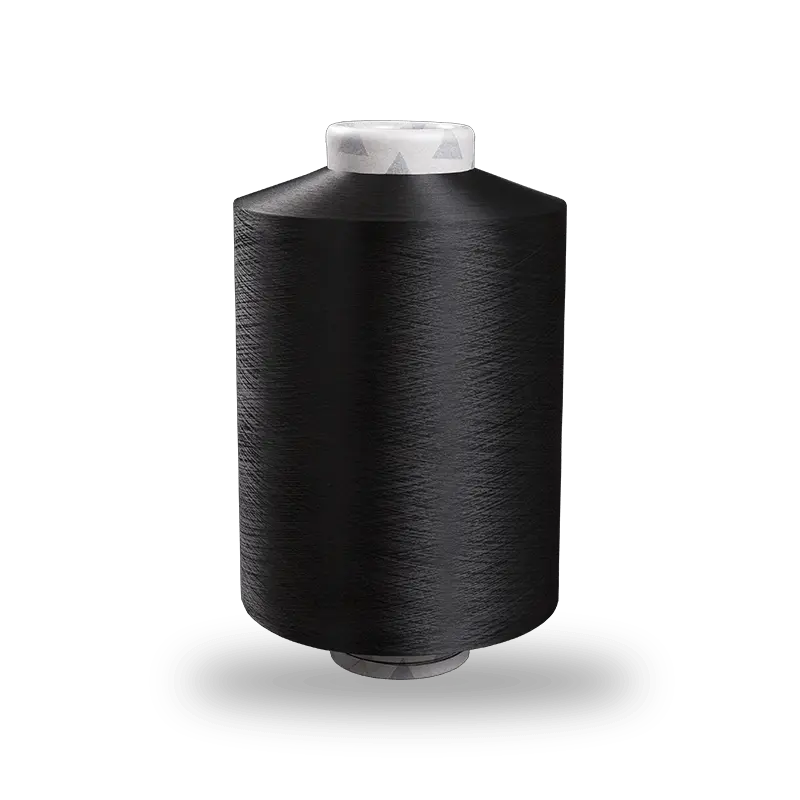 Nylon 6 DTY Filament Yarn Manufacturers, Nylon DTY SuppliersCentury ChenXing offer custom Nylon 6 DTY, Nylon Drawn Textured Yarn Manufacturers and Nylon DTY Suppliers, Factory Wholesale Nylon 6 DTY...View Product →
Quick Quality Checks for Incoming Yarn
Mills can verify intermingling levels with simple in-line methods. Pull 20–30 cm of yarn from the package and grip it between both hands, then slowly pull apart. A HIM yarn will offer a crisp, intermittent resistance as nodes release; SIM provides a lighter, rhythmic slip; NIM separates instantly with almost no resistance. Under a 30× magnifier, true nodes appear as tightly twisted crossover points, while false nodes show filaments simply pressed together without twist. Reject shipments where more than 10% of the nodes fail the pull test.
For a deeper methodology, refer to our quality control guidelines for nylon 6 DTY, which cover additional tests such as residual torque and oil content.