English
 中文简体
中文简体 Español
 عربى
عربى
News
Home / News / Industry News / Swimwear Fabric Guide: Nylon Spandex vs Polyester, Chlorine & UV Ratings
Content
What separates swimwear that keeps its shape for two seasons from swimwear that bags out after a few weeks has less to do with the brand label and more with the yarn inside the fabric. Swimwear is one of the most demanding textile applications: the fabric is stretched repeatedly, soaked in chlorinated or salt water, exposed to intense sun, and rubbed against sand and concrete. Every failure point — losing elasticity, fading, pilling, turning translucent at a seam — can be traced back to the fiber and yarn specification chosen before the fabric was knitted or woven.
Almost all swimwear fabric is a blend of two components: a synthetic filament for strength, color, and hand feel, plus a spandex component for stretch and recovery. The synthetic fiber is usually nylon or polyester, typically at 75–85% of the blend, while the spandex accounts for the remaining 15–25%. If either component underperforms, the garment fails even when the other works perfectly.
Six properties matter most when evaluating swimwear fabric:
| Property | What to check | Common reference |
|---|---|---|
| Elastic recovery | A four-way stretch fabric should recover to at least 90% of its original dimensions after repeated extension. | ASTM D3107 |
| Chlorine resistance | Minimal color loss and strength drop after repeated hypochlorite exposure. | AATCC 162 |
| UV resistance and lightfastness | Color retained after long sun exposure; UPF 50+ for sun-exposed styles. | ISO 105-B02 / AS/NZS 4399 |
| Dimensional stability | Shrinkage below 5% after repeated washing or pool exposure. | AATCC 135 |
| Abrasion and pilling | Fabric survives contact with concrete, board surfaces, and sand. | ASTM D4966 |
| Opacity when wet | No translucency at seams or high-stretch areas once the fabric is wet. | Visual wet-out check |
These criteria map directly to fabric composition. Nylon-based swimwear generally wins on hand feel and depth of color, while polyester-based fabric wins on chlorine and UV endurance. Yet within each family, the yarn specification determines how far the fabric can go in either direction.
Most swimwear fabric on the market falls into two families: nylon spandex and polyester spandex, in blend ratios typically around 80/20 or 75/25. Neither family is objectively better; each suits a different product brief and a different pattern of use.
| Criterion | Nylon spandex | Polyester spandex |
|---|---|---|
| Hand feel | Soft, smooth, drapes close to the skin | Firmer, slightly dry or crisp |
| Chlorine resistance | Moderate; degrades faster under heavy chlorination | Excellent; standard for competition swimwear |
| Color and UV | Deep, rich dye affinity; needs well-stabilized yarn | Very good color retention under long sun exposure |
| Water behavior | Absorbs some water; comfortable against skin | Low moisture absorption; dries noticeably faster |
| Stretch recovery | Excellent, especially with premium covered spandex | Good and reliably consistent |
| Typical use | Fashion swimwear, resort wear, premium cover-ups | Training suits, team uniforms, kids' swimwear, rental stock |
Fashion-led swimwear, resort collections, and any garment where the fabric's feel against the skin is the central design requirement are best served by nylon spandex. Nylon 6 filament yarns with a high filament count create the soft, fluid touch people associate with premium swimwear. The trade-off is that nylon tolerates chlorine and UV less well than polyester, so it works best for garments that will not face daily chlorinated pool training.
Polyester spandex dominates competitive and training swimwear because it keeps its color and strength through repeated chlorinated pool sessions. It is also the most practical option for team orders, children's swimwear, and resort or rental stock that is worn and washed constantly. The hand feel is less luxurious than premium nylon, but the fabric holds prints longer, dries faster, and requires less maintenance.
For either choice, the spandex needs proper covering to avoid exposed elastic and to keep dyeing consistent. This is where the yarn supply chain becomes as important as the mill's knitting quality. A dedicated swimsuit sourcing guide for air-covered spandex yarn can help clarify the difference between covering methods before you commit to a fabric.
The nylon-versus-polyester decision is only the first layer. Within a nylon swimwear fabric, the specific yarn type, denier, and filament count determine whether the fabric feels stiff and flat or soft and supple, and whether it holds its shape after pool exposure. The same logic applies to polyester, where filament quality decides pilling resistance and dye uniformity.
Woven swimwear fabric — typically used for boardshorts, swim trunks, and linings — is usually built with nylon 6 FDY yarn, which delivers smooth, uniform filaments and stable dimensional behavior. Knitted swimwear, which makes up most women's and children's swimsuits, benefits from nylon 6 DTY yarn: the textured structure adds bulk, softness, and better coverage, which helps prevent sheerness at high-stretch zones. Denier and filament count matter as much as yarn type. A 20D/24F yarn produces a very fine, soft hand for lightweight mesh; 40D/24F is a common workhorse for four-way stretch knits; 70D/24F or 70D/48F gives a firmer shell.
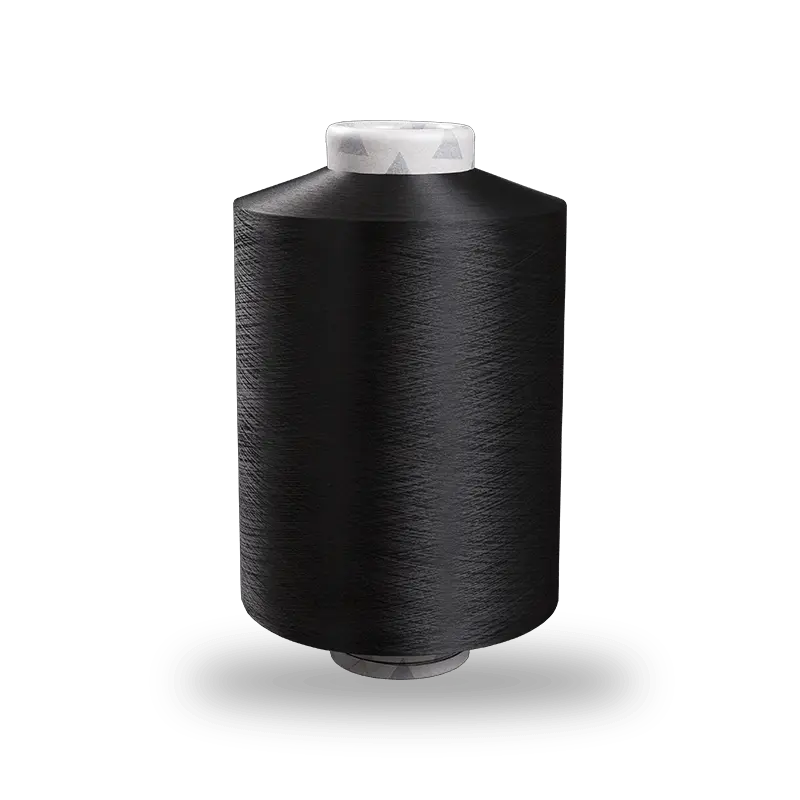 Nylon 6 DTY Filament Yarn Manufacturers, Nylon DTY SuppliersCentury ChenXing offer custom Nylon 6 DTY, Nylon Drawn Textured Yarn Manufacturers and Nylon DTY Suppliers, Factory Wholesale Nylon 6 DTY...View Product →
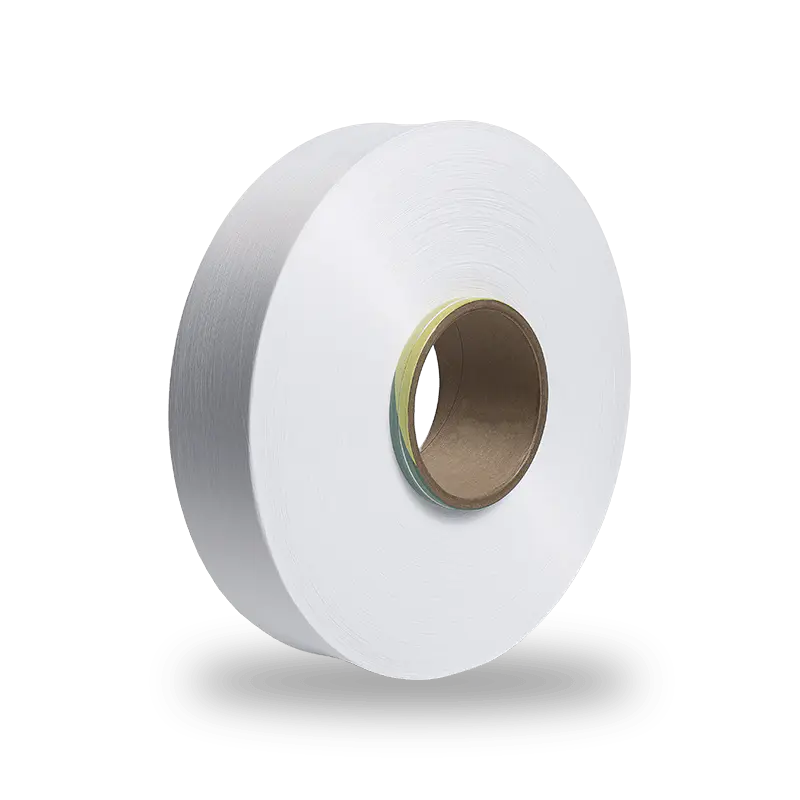 Nylon 6 FDY Manufacturers, Nylon Fully Drawn Yarn FactoryZhejiang Century ChenXing are China Nylon FDY Manufacturers and Custom Nylon 6 FDY Filament Yarn Factory, Nylon 6 FDY Suppliers, Wholesal...View Product →
Stretch in swimwear is delivered by spandex, but bare spandex is almost never knitted directly into the garment. It is covered with nylon or polyester filaments, either by air covering or by machine covering. Air-covered spandex yarn is especially popular for swimwear because it produces a soft, dry hand and consistent dye uptake; machine-covered spandex is smoother and denser and is often preferred for woven stretch fabric. The covering yarn, the spandex core denier, and the draft ratio — typically 2.5 to 3.5 times — together determine how much stretch the fabric achieves and how quickly it recovers. A supplier that controls the covering process, such as spandex covered yarn, can tune these variables for a specific recovery target.
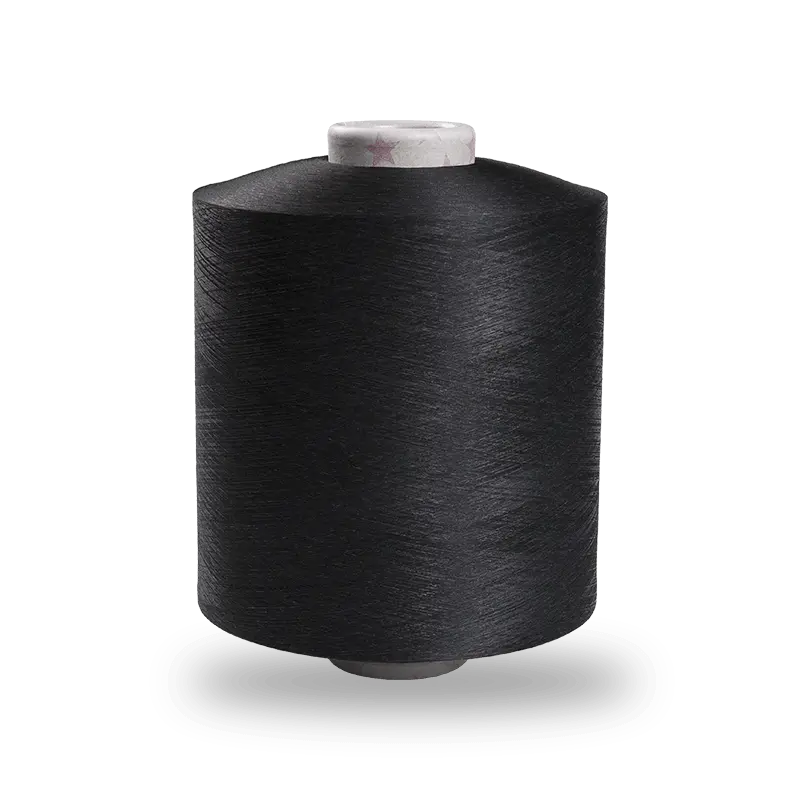 Spandex Covered Nylon Yarn Manufacturers, Suppliers, FactoryWe are China Spandex Covered Nylon Yarn Manufacturers and Suppliers, Wholesale Spandex Nylon Yarn Factory, Century ChenXing offer custom ...View Product →
The stretch system also affects how a garment behaves in hot, humid conditions and under direct sun. Fabrics made with air-covered nylon spandex generally keep their mechanical response because the nylon outer layer protects the spandex core. For outdoor and beach lines, understanding the UV resistance of spandex ACY yarn for swimwear is a useful step before finalizing the material package.
A reliable swimwear fabric spec sheet should state composition by percentage (for example, 80% nylon 6 / 20% spandex), fabric weight in grams per square meter, stretch percentage in both warp and weft directions, spandex draft ratio, and finishing details. Typical knitted swimwear fabric falls between 180 and 230 g/m²; linings run lighter, around 90 to 120 g/m². If a supplier cannot tell you the spandex draft ratio or the covering method, that is a sign the fabric's stretch behavior has not been fully engineered.
Sourcing swimwear fabric is a matter of verifying performance claims before committing to production. Combined chlorine, sunscreen chemicals, salt water, and heat can expose a weak yarn structure within a few wears, and those failures are expensive to discover after garments have shipped.
Garment brands typically buy finished fabric from mills; mills, in turn, depend on the quality of the yarns they source. If you are developing a new swimwear fabric — or if you keep failing a chlorine or stretch-recovery test with stock fabric — the fastest fix is often to change the yarn specification rather than the knitting settings. A yarn supplier that controls the process from nylon 6 chips through spinning, drawing, texturing, and spandex covering can adjust filament count, twist, intermingling, and draft ratio to hit the performance profile the mill and the brand require. That kind of collaboration works best when the supplier is engaged early in development.
The most reliable swimwear fabric is not simply the most expensive; it is the fabric whose yarn has been specified deliberately for chlorine, UV, stretch recovery, and hand feel, then verified by testing. Whether you choose nylon spandex for a soft, premium hand or polyester spandex for endurance, the yarn behind the fabric determines whether the garment performs as promised after a season in the water. If you are refining a swimwear yarn specification or need help comparing covered spandex options, discuss your swimwear yarn requirements with our team.
Fully Automatic Winding: Yarn Quality & Automation Guide
Leggings Yarn Explained: Nylon 6 DTY and Spandex Covered Yarn Sourcing Guide
+86-(0)572-6295569
+86-193 5712 3632
# 1, Fuqian Street, Si'an Town, Changxing County, Huzhou City, Zhejiang Province, China.